






NewsCenter
Cartridge Dust Collector for Metalworking: Applications and Considerations
Author: jiuzhoudust Date: 2026-10-08 12:33:44 Views: 93
Metalworking generates some of the most difficult particulate and fume streams to manage in an industrial plant. Welding produces a fine respirable fume with a complex metal-oxide composition. Grinding and sanding throw off sharp, abrasive dust. Thermal cutting releases both fume and smoke. Many of these fractions are small enough to stay airborne for long periods and to penetrate deep into the lungs, which is why exposure limits and housekeeping standards treat them seriously. Left uncontrolled, the same dust settles on surfaces, creates slip and fire hazards, and contaminates finished work.
Cartridge filtration fits this environment because it captures fine particulates efficiently in a compact footprint and supports automated cleaning that keeps the line running. It is not a universal answer, though—metalworking dust brings spark, oil-mist, and combustible-dust complications that a spec must address directly. This article covers where a cartridge dust collector for metalworking is used, the considerations that separate a safe installation from a risky one, and how to size and maintain it for harsh shop conditions.
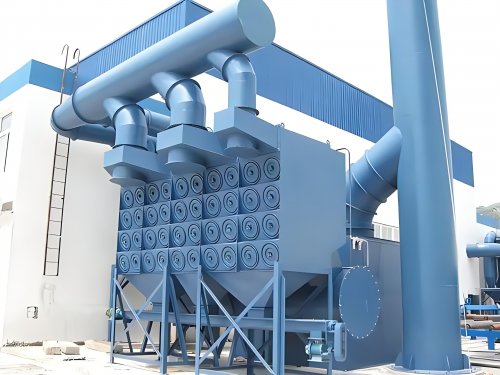
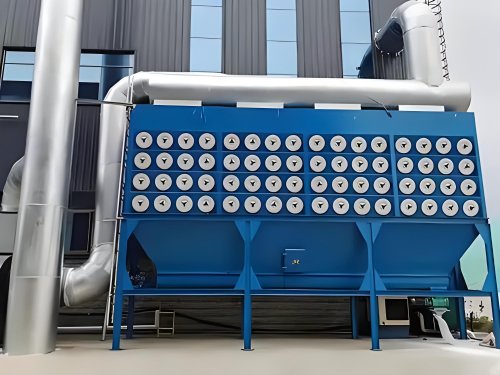
Metalworking Dust and Fume Challenges
Metalworking emissions vary by process, but several challenges recur:
Particle size — welding fume and much grinding dust fall in the respirable range, so the collector must capture sub-micron fractions, not just visible chips.
Abrasiveness — ground metal dust wears media and internal surfaces, shortening service life if the media and airflow are not chosen well.
Heat and sparks — cutting and grinding introduce hot particles that must be intercepted before they reach the media.
Oil and coolant — many shops run wet processes; oil-laden dust is sticky and blinds standard media faster.
Combustibility — certain metals form combustible dusts, and the fines plus an ignition source create a recognized explosion hazard.
A collector that performs well on dry wood dust can fail quickly on oily steel grinding or on aluminum fines. The selection has to follow the actual stream, not a generic "dust collector" label.
Where Cartridge Collectors Are Used in Metalworking
Cartridge collectors appear across the metalworking floor wherever fine particulate or fume needs capture at the source or in the general area.
Welding and soldering fume
Welding fume is a primary fit for cartridge filtration. The fume is fine, hot at the arc, and contains metal oxides that are hazardous at low concentrations. Capture is usually at the gun (fume extraction torch or arm) or at a downdraft or backdraft bench, with the fume pulled through cartridges. The key is getting capture close to the arc so the fume does not disperse into the breathing zone before it is pulled away.
Grinding, sanding, and deburring
These processes produce larger but still fine and abrasive dust. A downdraft table or enclosed booth works well, with cartridges catching the particulate. Because the dust is abrasive, media choice and inlet design matter: the system should drop heavier particles before they load the media, and the media should resist surface wear.
Laser and plasma cutting
Thermal cutting generates fume, smoke, and fine particulate, often with hot sparks embedded in the airstream. Source capture from below the table (water tray or extraction plenum) is common. Given the spark load, spark-arrestance upstream of the media is essential, and the collected material is frequently combustible depending on the metal.
Thermal spray and finishing
Thermal spray, buffing, and some coating operations release fine overspray and dust. Cartridge collectors handle the particulate fraction, though finishing lines that are dominated by wet or tacky coatings may need media or pre-separation suited to those conditions rather than standard dry filtration.
Key Considerations for Metalworking
The difference between a workable metalworking installation and a problem one usually comes down to a handful of design decisions.
Spark arrestance and fire risk
Any hot-work process sends sparks downstream, and a spark reaching loaded media is a fire risk. Spark arrestors, deflection baffles, settling chambers, or abort gates placed ahead of the cartridges reduce what reaches the media. The exact device depends on the process intensity; the principle is to cool and drop hot particles before they enter the filter chamber. This is a safety feature, not an optional add-on, on cutting and grinding lines.
Oil mist and coolant-laden dust
Oil mist makes dust sticky and plugs standard cellulose or untreated media quickly. Where coolant or cutting oil is present, the media and any pre-separation should account for the oily fraction—surface-treated or synthetic media that sheds the load better, plus inlet design that limits how much mist reaches the cartridges. Ignoring oil content is a common cause of early, unexplained pressure-drop rise.
Filter media selection for fine particulates
Metalworking calls for media rated for fine and respirable fractions. Pleated cartridges with a fine, often surface-loading media capture small particles while keeping pressure drop manageable through pulse cleaning. The trade is that finer media loads faster, so it needs adequate cleaning energy and a sensible air-to-cloth ratio. Media with a release treatment helps the pulse shed the dust cake, which matters when the dust is fine or slightly tacky.
Combustible dust and NFPA compliance
Some metal dusts—aluminum and magnesium among them—are combustible, and fine metal powder with an ignition source is a recognized explosion hazard. Where the collected material is a listed combustible metal dust, the installation must follow the applicable NFPA standards rather than a generic dust-collector design. That affects construction, isolation, suppression, grounding, and location of the collector relative to the building. Treating combustible metal dust as an ordinary nuisance dust is a serious compliance and safety error.
Capture method: source vs ambient
Capture strategy drives both effectiveness and cost. Source capture—extraction at the tool, bench, or booth—pulls contaminant away at origin and needs less total airflow. Ambient or general ventilation dilutes what has already escaped and is less efficient at protecting the breathing zone. For most metalworking fume, source capture is the preferred engineering control, with the collector sized to the capture devices rather than to the whole room volume.
Sizing and Airflow for Metalworking Shops
Sizing starts from the capture points: the required face velocity at each hood, bench, or torch, converted to a total airflow. That airflow, divided by the chosen air-to-cloth ratio, sets the needed filter media area and therefore the collector size. If the ratio is too aggressive, the media loads fast and the fan fights a rising pressure drop; if it is too conservative, the unit is larger and costs more than necessary. The right value depends on the specific dust loading and particle size, so it should be confirmed against the process rather than copied from an unrelated application.
Duct design also matters: balanced runs keep the required capture velocity at every inlet. Long or poorly laid-out duct loses velocity and lets coarse dust drop out where it should not, or fails to capture fine fume at the source.
Maintenance in a Harsh Environment
Metalworking is hard on collectors, so maintenance discipline pays off:
Track pressure drop; a sharp climb signals blinded or oil-loaded media.
Inspect spark-arrestance devices and clear accumulated hot material before it builds up.
Confirm pulse cleaning is firing correctly—valves and air supply are the usual failure points.
Check media for bridging, tearing, or hardening from oil exposure, and replace on condition.
Keep the compressed-air supply clean and dry so pulse cleaning stays effective.
For combustible dusts, follow the required inspection and housekeeping routine tied to the applicable standard.
In a grinding or cutting shop, the maintenance interval is shorter than in a clean assembly area. Planning for that—rather than assuming a generic schedule—keeps the system effective.
Customization for Metalworking Layouts
Shops rarely fit a single off-the-shelf box. Common customizations include multiple benches or booths feeding one collector, source-capture arms on movable weld stations, under-table extraction for cutting tables, and centralized systems serving several process cells. The layout decision affects duct routing, total airflow, and whether a single large collector or several distributed units makes more sense. Where future process changes are likely, a modular approach—expandable filter banks or additional capture points—avoids a full redesign later.
FAQ
Can one cartridge collector handle welding, grinding, and cutting in the same shop?
Often yes, if the system is designed around the combined capture airflow and the dust characteristics are compatible. The caveat is that oily grinding dust and dry welding fume load media differently, and combustible cutting dust may impose separate safety requirements. A shared unit needs media and pre-separation chosen for the worst-case stream, and combustible dusts may need dedicated handling.
How do I know if my metal dust is combustible and needs special design?
Combustibility is a property of the specific metal and its particle size, not a guess. Where the material is a listed combustible metal, the applicable NFPA standard governs the collector design and installation. If you are unsure whether your dust qualifies, the safe step is to treat it as potentially combustible and confirm against the relevant standard and the material's safety data rather than proceeding on assumption.
Why does oil mist cause problems in a cartridge collector?
Oil makes dust sticky, so it adheres to the media instead of releasing on the pulse. Standard untreated media then blinds prematurely, pressure drop climbs, and capture drops. Oily environments need media and pre-separation suited to the condition, plus attention to how much mist actually reaches the cartridges.
Is source capture always better than ambient collection?
For fine fume, source capture is generally the more effective engineering control because it removes contaminant at the origin and protects the breathing zone with less total airflow. Ambient collection dilutes what has already spread and is usually less efficient for respiratory protection. The two are sometimes combined, but source capture is the starting point for metalworking fume.
What fails first in a metalworking cartridge collector?
In practice, the cleaning system and pre-separation tend to fail before the media does. Spark devices clog or are ignored, compressed-air supply is wet or under-pressure, and valves stop firing cleanly—so the media loads even though it is sound. Routine checks on those items prevent most premature media changes.
Conclusion
A cartridge dust collector for metalworking is a strong fit for fine fume and dust from welding, grinding, and cutting, provided the design respects the realities of the shop: sparks, oil, abrasive load, and—where applicable—combustible dust. Get the capture method, media, and safety features right, and the unit delivers efficient, continuous control in a compact package. Get them wrong, and the same collector blinds early or creates hazards it was meant to prevent.
Specifying the right system means matching capture, media, and compliance to your actual processes. If you are planning or upgrading metalworking dust control, the team at jiuzhoudust.com can help review your processes and configure a safe, effective cartridge collector for your layout.
References
U.S. Occupational Safety and Health Administration, OSHA Technical Manual (OTM), Section IV: Chapter 2, Ventilation, and OSHA welding fume guidance.
National Fire Protection Association, NFPA 484, Standard for Combustible Metals, and NFPA 654, Standard for the Prevention of Fire and Dust Explosions from the Manufacturing, Processing, and Handling of Combustible Particulate Solids.
ASHRAE Handbook—HVAC Systems and Equipment, chapter on air cleaners and filtration.
U.S. Environmental Protection Agency, Compilation of Air Pollutant Emission Factors, AP-42, Chapter 12: Metallurgical Industries (metalworking emission discussion).
 Recommended Products
 Contact Us
—— Consultation Hotline: +86 17331708686
—— WhatsApp:+8617331708686
—— Email: lujingya66@163.com
—— Website:https://www.jiuzhoudust.com
—— Address: Siying Development Zone, Botou City, Hebei Province, China