






NewsCenter
Pulse Jet Cartridge Dust Collector: Cleaning Principle and Benefits
Author: jiuzhoudust Date: 2026-10-15 09:55:16 Views: 155
Controlling fine airborne dust is a recurring problem in plants that cut, grind, sand, or convey powders. Once a particle is small enough to stay suspended in the airstream, it migrates past coarse separation stages and, without filtration, accumulates on surfaces, contaminates product, and exposes workers to respirable fractions. The practical constraint in most of these operations is not capturing the dust—it is keeping the filter clean enough to sustain airflow without stopping the process.
Manual filter changes are disruptive and labor-intensive, and any system that requires a full shutdown to clean can idle an entire line. That is why automated, in-line cleaning matters: it lets a collector keep running while it regenerates its media. This article explains what a pulse jet cartridge dust collector is, how its compressed-air reverse-pulse cleaning cycle works, which components drive that cycle, and the operational benefits that make the design a common choice for fine-dust service.
What Is a Pulse Jet Cartridge Dust Collector?
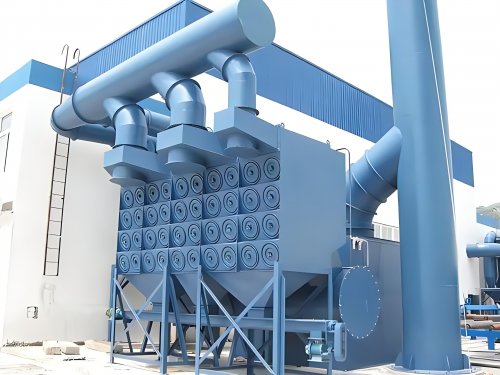
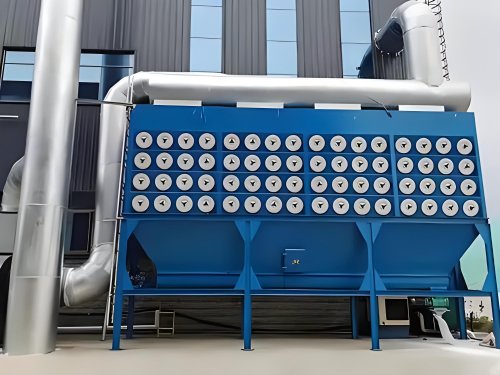
A pulse jet cartridge dust collector is a dry filtration unit that removes particulate from a dust-laden airstream using pleated filter cartridges and a compressed-air cleaning system. Contaminated air enters the housing, passes through the cartridge media from the outside to the inside, and the cleaned air is exhausted while captured dust accumulates on the outer surface of the media.
Unlike older shaker or reverse-air designs that rely on mechanical motion or low-pressure reverse flow, the pulse jet approach uses short, high-pressure bursts of compressed air directed from inside the cartridge outward. This reverse-pulse action dislodges the dust cake so it falls into a hopper or collection bin below. The defining feature is that cleaning happens while the collector is running, so there is no need to take the unit offline to maintain filtration performance.
The "cartridge" part of the name refers to the filter element geometry. Pleated cartridges provide a large media surface area in a comparatively small housing volume, which is one reason the design suits applications where space is limited but fine-particle capture is required.
The Pulse Jet Cleaning Principle
The core idea is simple: a brief pulse of compressed air travels down a blowpipe, expands through a venturi at the top of each cartridge, and momentarily reverses airflow inside the cartridge. That reverse flow flexes the media and knocks the dust layer loose. The freed dust drops by gravity into the collection hopper. The cycle repeats row by row for the cartridges in service, so only a small fraction of the filter area is being cleaned at any moment.
How the reverse-pulse cleaning cycle works
During normal filtration, dirty air moves from outside the cartridge to inside, depositing dust on the media. When the control system determines that cleaning is needed—typically based on a measured pressure drop across the filters—it energizes one valve at a time. A fast-acting valve releases a slug of compressed air into the blowpipe. At the cartridge inlet, a venturi accelerates and spreads the air, creating a pressure wave that travels down the cartridge length and shocks the dust cake free.
The pulse is very short, on the order of a fraction of a second, and the system sequences through cartridges in a controlled order rather than firing them all at once. Because only one row is pulsing at a time, the rest of the unit continues filtering, and the overall pressure drop stays manageable. The dislodged dust, now no longer held to the media, falls into the hopper below.
Role of the compressed-air reservoir and diaphragm valves
The cleaning energy comes from a dedicated compressed-air reservoir, sometimes called a tank or header, that stores air at the system pressure. A reservoir matters because a single pulse demands a sudden, high-volume release that a long supply line cannot deliver smoothly. By staging the air locally, the system produces a consistent, sharp pulse for every valve.
Each cartridge or cartridge row is served by a diaphragm valve. The diaphragm isolates the compressed air until the controller signals the valve to open. When it opens, the stored air rushes through the blowpipe to the cartridge. The valves are the components that actually time and shape the pulse, and their responsiveness determines how effectively the dust cake is released. Proper attention to valve condition, air quality, and supply pressure is what keeps the cleaning action repeatable over time.
Filter regeneration vs filter replacement
It is important to separate two different events. Pulse cleaning is regeneration: it restores most of the filter's airflow capacity by removing the accumulated dust cake, and it happens continuously during operation. Filter replacement is a separate, infrequent event that occurs when the media itself degrades—through blinding, mechanical damage, or simply reaching the end of its useful service life.
Effective pulse cleaning delays replacement by keeping the media from loading to the point of permanent blockage. However, it does not eliminate replacement. Some fraction of residual dust remains after each pulse, and over many cycles a baseline pressure drop develops. The goal of a good cleaning strategy is to keep that baseline low and stable so the cartridges reach their expected service interval rather than being changed early.
Key Components Involved in Cleaning
Several parts work together to deliver repeatable cleaning:
Compressed-air reservoir — stores cleaning air at the required pressure so each pulse is sharp and consistent.
Blowpipe and nozzles — distribute the pulse to each cartridge and direct it down the element interior.
Venturi (diffuser) — accelerates and spreads the air at the cartridge mouth to improve pulse penetration along the full length.
Diaphragm valves — open and close on command to release individual pulses.
Sequencer or controller — decides when and in what order to fire valves, based on timer settings or pressure-drop feedback.
Filter cartridges — the media that captures dust and flexes under the reverse pulse to shed the cake.
Hopper and discharge — receive the dislodged dust and allow controlled removal.
Each component influences cleaning quality. A weak venturi, a sluggish valve, or an undersized reservoir will reduce pulse effectiveness, and the collector will show it through rising pressure drop and shorter intervals between cleanings.
Operational Benefits
The reason plants spec this design is not the cleaning mechanism in isolation, but the operating profile it produces.
Continuous operation without shutdown
Because cleaning is performed in-line, the collector does not need to stop for routine dust removal. In continuous-process plants, that translates directly into uptime: the dust control equipment is not the constraint that forces a line to pause. Filter regeneration and production proceed at the same time.
Energy and compressed-air efficiency
Pulse cleaning consumes compressed air only in short bursts, and only for the rows being cleaned. Compared with systems that run continuous reverse-air flow or mechanical shaking over the whole filter bank, the intermittent pulse approach uses air more sparingly. The amount of air used depends on valve size, pulse duration, frequency, and supply pressure, all of which can be tuned. Good controller strategy—cleaning based on actual need rather than a fixed clock—further limits unnecessary air consumption.
Reduced maintenance labor
Automated cleaning removes the manual knock-down and frequent change-out that older methods required. Maintenance staff are not needed to interrupt the process for cleaning, and cartridge access is typically straightforward for the periodic replacement events that do occur. The labor that remains is inspection, occasional valve or diaphragm service, and scheduled media replacement.
Compact footprint for given airflow
Pleated cartridge media packs a large surface area into a small envelope. For a target airflow and pressure drop, a cartridge collector can occupy less floor space than a comparable baghouse using flat or tubular bags. That compactness is valuable in retrofits and in plants where floor area is at a premium.
Consistent pressure drop control
A well-tuned pulse sequence keeps the dust cake from building to a level that drives pressure drop sharply upward. Stable pressure drop means the fan works against a predictable resistance, which helps hold airflow and capture efficiency steady. Wide swings in pressure drop are a symptom that cleaning is not keeping pace, and they usually point back to air supply, valve timing, or media condition.
Where Pulse Jet Cartridge Collectors Fit Best
The design is well matched to applications with fine, dry, non-agglomerating dust where high filtration area per volume is useful. Common fits include metalworking fume and grinding dust, powder handling and conveying, pharmaceutical and food processing where cleanability matters, woodworking, and general industrial processes generating respirable particulates. Where the dust is very moist, sticky, or prone to clogging the media, cleaning effectiveness decreases and the design may need careful media and airflow selection—or a different approach.
Comparison With Other Cleaning Methods
Three cleaning philosophies are worth contrasting:
Shaker cleaning — uses mechanical motion to vibrate bags and shed dust. It generally requires the unit to be off-line for cleaning or operates in compartments, and it is better suited to coarser, less friable dust. It avoids compressed air but sacrifices continuous single-compartment operation.
Reverse-air cleaning — pushes low-pressure air backward through the media to flex it. It is effective for large baghouses handling high volumes but uses continuous or compartmentalized reverse flow and tends toward larger footprints.
Pulse jet cleaning — uses short, high-pressure bursts while on-line. It favors compact housings and fine-dust service, at the cost of needing a reliable compressed-air supply and disciplined air-quality maintenance.
The choice is not about one method being universally better. It is about matching cleaning energy, footprint, and operating continuity to the dust characteristics and the plant's process constraints.
Selection and Specification Considerations
When specifying a pulse jet cartridge dust collector, the practical questions are:
Airflow and air-to-cloth ratio — the design face velocity affects both capture efficiency and how fast the media loads. A conservative ratio leaves more margin before pressure drop climbs.
Dust characteristics — particle size distribution, loading, abrasiveness, and whether the material is combustible all shape media and safety choices.
Compressed-air supply — available pressure, volume, and air quality (dry, oil-free) determine whether pulse cleaning will perform as designed.
Media type — pleated cellulose, synthetic, or treated blends offer different balances of efficiency, release, and durability.
Discharge method — hopper, rotary valve, or bin arrangement affects how collected dust is handled and whether it is returned to process or removed.
Compliance context — where the collected dust is combustible, applicable fire and explosion protection standards govern design details.
Maintenance Practices for Cleaning System
Sustained cleaning performance depends on a small set of routine checks:
Monitor pressure drop trends; a steady rise despite normal pulsing signals media degradation or inadequate cleaning.
Inspect diaphragm valves and blowpipe alignment so each cartridge receives a proper pulse.
Keep the compressed-air supply dry and filtered to avoid fouling valves and wetting the media.
Confirm the sequencer settings match actual operating load rather than a default schedule.
Check cartridges for bridging, damage, or blinding during scheduled inspections.
Verify hopper discharge is clear so dislodged dust does not re-entrain into the airstream.
Most cleaning-system failures trace back to air supply or valve issues rather than the media itself. Treating compressed air as a critical utility—not an afterthought—protects the whole cleaning function.
FAQ
How often should a pulse jet collector clean its filters?
Cleaning frequency depends on dust loading, air-to-cloth ratio, and controller strategy. Many systems clean on a pressure-drop setpoint rather than a fixed timer, so the interval self-adjusts to actual load. The right answer is specific to the application and should be confirmed against measured pressure drop.
Does pulse cleaning eliminate the need to replace cartridges?
No. Pulse cleaning regenerates the media by removing the dust cake, but it does not restore a cartridge that has blinded, torn, or reached end of life. Replacement remains an infrequent but necessary event, and good cleaning only extends the interval between replacements.
What compressed-air quality does the cleaning system need?
Clean, dry, oil-free air is the general requirement. Moisture or oil in the pulse air can wet the media, foul valves, and degrade cleaning. Exact pressure and volume specifications are equipment-dependent and should follow the manufacturer's design parameters.
Can a pulse jet collector handle combustible dust?
It can be applied to combustible dust, but only with design features and protections required by the relevant standards for that material. Combustible-dust service introduces ignition-source control, isolation, and explosion-protection requirements that go beyond the cleaning mechanism itself.
Why is a compressed-air reservoir used instead of a direct supply line?
A reservoir delivers the sudden, high-volume burst a pulse needs, which a long or restricted supply line cannot provide reliably. Staging the air locally keeps every pulse sharp and consistent, which is what makes cleaning repeatable across the full filter bank.
Conclusion
A pulse jet cartridge dust collector earns its place where fine dust must be controlled without stopping the process. Its compressed-air reverse-pulse cleaning keeps media regenerated on-line, supports continuous operation, and—when supplied with clean, dry air—delivers steady pressure-drop control with comparatively low maintenance labor and a compact footprint. The trade-offs are a dependency on reliable compressed air and careful media selection for the specific dust.
For plants evaluating dust collection, the cleaning mechanism should be matched to the dust and the process, not chosen in isolation. If your application involves fine, dry particulate and you need continuous operation, a pulse jet cartridge design is worth a closer look. To discuss configuration, media, and sizing for your process, contact the team at jiuzhoudust.com.
References
U.S. Occupational Safety and Health Administration, OSHA Technical Manual (OTM), Section IV: Chapter 2, Ventilation. Available from the OSHA website.
National Fire Protection Association, NFPA 654, Standard for the Prevention of Fire and Dust Explosions from the Manufacturing, Processing, and Handling of Combustible Particulate Solids.
ASHRAE Handbook—HVAC Systems and Equipment, chapter on air cleaners and filtration.
U.S. Environmental Protection Agency, Compilation of Air Pollutant Emission Factors, AP-42, Chapter 13: Miscellaneous Sources (particulate emission discussion).
 Recommended Products
 Contact Us
—— Consultation Hotline: +86 17331708686
—— WhatsApp:+8617331708686
—— Email: lujingya66@163.com
—— Website:https://www.jiuzhoudust.com
—— Address: Siying Development Zone, Botou City, Hebei Province, China