






ProductDetails
-
Baghouse Dust Collector
-
Cartridge Dust Collector
-
Wet Electrostatic Precipitator (WESP)
-
Sintered Plate Dust Collector
-
Desulfurization & Denitrification
-
Cyclone Dust Collector
-
Wire Mesh Demister
-
Catalytic Combustion
-
Electrostatic Precipitator Parts
-
Valves
-
Dust Collector Filter Cage
-
Dust Filter Cloth
-
Pulse Control Instrument
-
Pulse Solenoid Valve
-
Rotary Airlock Valve
-
Pneumatic Conveying System
-
Conveying Machinery
-
Water Treatment Chemicals
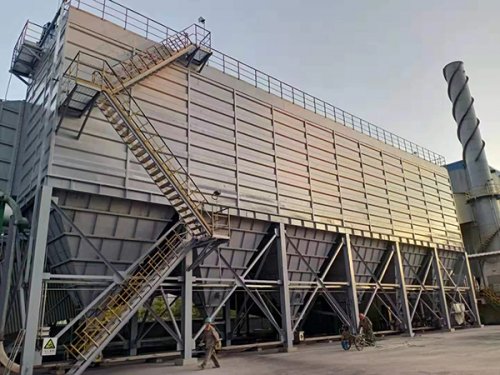
Baghouse Dust Collector for Ceramic Industry
Baghouse Dust Collector for Ceramic Industry
Baghouse Dust Collector for Ceramic Industry is a fabric filtration system used to collect dust generated during ceramic material processing and production. It can be applied to processes involving raw material handling, crushing, grinding, mixing, molding, glazing, polishing, and other powder-producing operations.
Ceramic production can generate fine particles from clay, feldspar, quartz, alumina, silica-containing materials, glaze powders, and finished-product processing. The dust-laden air is directed into the baghouse, where filter bags separate solid particles from the process airflow.
Inside the filtration chamber, contaminated air passes through the filter bags. Dust is retained on the outer surface of the bags while cleaned air moves into the clean-air chamber. As dust accumulates, the pressure differential gradually increases.
A pulse-jet cleaning system periodically releases compressed-air pulses to remove the accumulated dust layer. The detached material falls into the hopper and is discharged through a rotary airlock, screw conveyor, or other suitable dust handling device.
Filter bag selection depends on the characteristics of the ceramic dust and the operating temperature and humidity of each process. Polyester, PPS, aramid, fiberglass, PTFE-coated, and other filter materials can be considered for different working conditions.
The baghouse can be connected to individual production machines or arranged as a centralized dust collection system. Ductwork, fans, hoppers, discharge equipment, and control components are configured according to the required airflow and plant layout.
Main Components
Baghouse housing
Filter bags
Filter bag cages
Dust inlet
Clean-air chamber
Pulse-jet cleaning system
Compressed-air manifold
Dust hopper
Rotary airlock or screw conveyor
Differential pressure monitoring
Induced draft fan
Control system
Working Process
Dust generated during ceramic processing enters the collection duct.
Dust-laden air flows into the baghouse.
Filter bags capture ceramic particles.
Cleaned air passes into the clean-air chamber.
Differential pressure is monitored during operation.
Pulse cleaning removes accumulated dust.
Collected dust falls into the hopper and is discharged.
Product Characteristics
Fabric filtration for ceramic dust
Pulse-jet bag cleaning
Different filter media options
Centralized or individual dust collection
Integrated hopper and dust discharge
Configurable airflow and filtration area
Suitable for continuous production processes
Applications
Ceramic raw material processing
Clay crushing and grinding
Ceramic powder handling
Mixing and batching
Ceramic molding
Glazing operations
Ceramic tile polishing
Ceramic product finishing
 Recommended News
-
Durable Sintered Plate Dust Collector: Ideal Solution for Humid and Corrosive Industrial Dust Removal
2026-08-15 11:46:41
-
Sintered Plate Dust Collector: Corrosion-Resistant High-Efficiency Dust Removal Equipment for Harsh C
2026-08-10 11:46:12
-
Advantages and Working Principle of Industrial Wet Electrostatic Precipitator for Ultra-Low Emission
2026-08-08 11:45:41
-
Wet Electrostatic Precipitator: Advanced Flue Gas Purification Equipment for Industrial Emission Cont
2026-08-04 11:28:00
-
Why Choose Industrial Cartridge Dust Collector? Features and Application Scenarios
2026-07-30 11:27:25
Contact Us
—— Consultation Hotline: +86 17331708686
—— WhatsApp:+8617331708686
—— Email: lujingya66@163.com
—— Website:https://www.jiuzhoudust.com
—— Address: Siying Development Zone, Botou City, Hebei Province, China