






ProductDetails
-
Baghouse Dust Collector
-
Cartridge Dust Collector
-
Wet Electrostatic Precipitator (WESP)
-
Sintered Plate Dust Collector
-
Desulfurization & Denitrification
-
Cyclone Dust Collector
-
Wire Mesh Demister
-
Catalytic Combustion
-
Electrostatic Precipitator Parts
-
Valves
-
Dust Collector Filter Cage
-
Dust Filter Cloth
-
Pulse Control Instrument
-
Pulse Solenoid Valve
-
Rotary Airlock Valve
-
Pneumatic Conveying System
-
Conveying Machinery
-
Water Treatment Chemicals
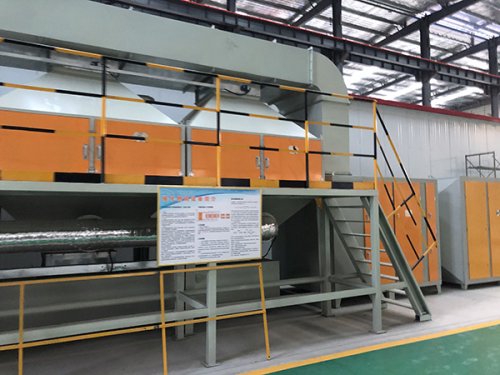
Catalytic Combustion System
Catalytic Combustion System
Catalytic Combustion System is a waste gas treatment process that uses a catalyst to promote the oxidation of combustible organic compounds in an exhaust stream. The system operates by bringing the gas to a suitable reaction condition before directing it through a catalytic reaction zone.
The exhaust gas first passes through the inlet and pretreatment section. Depending on the gas composition, filtration or other preliminary treatment may be used to remove particulate matter or substances that could affect the catalyst. A heating section then raises the gas temperature to the required catalytic reaction range.
After preheating, the gas enters the catalyst bed. Organic compounds react with oxygen on the catalyst surface and are converted into simpler oxidation products. The treated gas then passes through the outlet section and can transfer part of its heat to the incoming gas through a heat exchanger.
System operation is controlled through parameters such as inlet temperature, gas flow rate, pollutant concentration, oxygen content, pressure, and catalyst operating condition. Temperature sensors and control components can be installed at key points to monitor the reaction process.
The catalyst type and reactor configuration depend on the composition of the exhaust gas and the required treatment conditions. Upstream filtration or adsorption may be incorporated when the gas contains dust, oil mist, or other catalyst-sensitive substances.
System Components
Exhaust gas inlet
Pretreatment unit
Preheating section
Catalytic reactor
Catalyst bed
Heat exchanger
Temperature monitoring devices
Control system
Treated gas outlet
Operating Process
Exhaust gas enters the treatment system.
Particulate or interfering substances are removed when required.
The gas is heated to the specified catalytic reaction temperature.
Heated gas passes through the catalyst bed.
Organic compounds undergo catalytic oxidation.
Treated gas exits the reactor and may transfer heat through the heat exchanger.
Applications
VOC-containing exhaust
Solvent vapor treatment
Painting and coating exhaust
Printing processes
Chemical production
Pharmaceutical manufacturing
Organic waste gas treatment
Industrial process exhaust
 Recommended News
-
Durable Sintered Plate Dust Collector: Ideal Solution for Humid and Corrosive Industrial Dust Removal
2026-08-15 11:46:41
-
Sintered Plate Dust Collector: Corrosion-Resistant High-Efficiency Dust Removal Equipment for Harsh C
2026-08-10 11:46:12
-
Advantages and Working Principle of Industrial Wet Electrostatic Precipitator for Ultra-Low Emission
2026-08-08 11:45:41
-
Wet Electrostatic Precipitator: Advanced Flue Gas Purification Equipment for Industrial Emission Cont
2026-08-04 11:28:00
-
Why Choose Industrial Cartridge Dust Collector? Features and Application Scenarios
2026-07-30 11:27:25
Contact Us
—— Consultation Hotline: +86 17331708686
—— WhatsApp:+8617331708686
—— Email: lujingya66@163.com
—— Website:https://www.jiuzhoudust.com
—— Address: Siying Development Zone, Botou City, Hebei Province, China