






ProductDetails
-
Baghouse Dust Collector
-
Cartridge Dust Collector
-
Wet Electrostatic Precipitator (WESP)
-
Sintered Plate Dust Collector
-
Desulfurization & Denitrification
-
Cyclone Dust Collector
-
Wire Mesh Demister
-
Catalytic Combustion
-
Electrostatic Precipitator Parts
-
Valves
-
Dust Collector Filter Cage
-
Dust Filter Cloth
-
Pulse Control Instrument
-
Pulse Solenoid Valve
-
Rotary Airlock Valve
-
Pneumatic Conveying System
-
Conveying Machinery
-
Water Treatment Chemicals
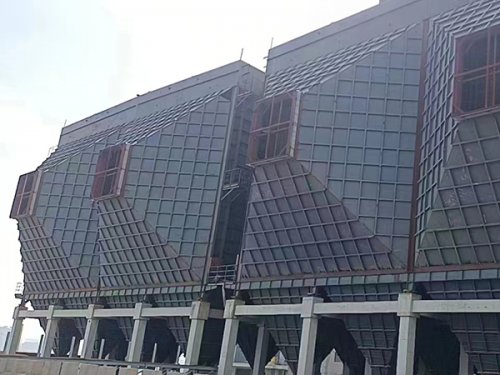
High Efficiency Wet Electrostatic Precipitator
High Efficiency Wet Electrostatic Precipitator
High Efficiency Wet Electrostatic Precipitator is designed to remove fine particulate matter, acid mist, oil mist, and liquid droplets from industrial gas streams. It combines electrostatic particle collection with wet cleaning to maintain the collecting surfaces during operation.
Contaminated gas enters the treatment chamber and passes through an electrical field generated between discharge and collecting electrodes. Fine particles and droplets are electrically charged and migrate toward the collecting electrodes under the influence of the electrostatic field.
The collected material forms a deposit on the wet collecting surfaces. A water washing system periodically or continuously flushes the electrodes, allowing the deposited particles and liquid contaminants to move downward into the drainage section.
The internal gas distribution structure is designed to provide relatively uniform flow through the collection zone. Electrode spacing, discharge conditions, collecting surface area, gas velocity, and residence time all influence particle collection performance.
Tubular and plate-type collecting electrode configurations can be used according to equipment dimensions and process requirements. Construction materials are selected based on gas temperature, moisture, acidity, and other corrosive conditions.
The system can include high-voltage power supplies, electrode assemblies, washing devices, drainage equipment, insulators, monitoring instruments, and automatic controls. Operating parameters such as voltage, current, gas flow, temperature, pressure, and washing frequency can be monitored during operation.
Main Components
Wet ESP housing
Discharge electrodes
Collecting electrodes
High-voltage power supply
Gas distribution system
Water washing system
Spray or flushing devices
Drainage section
Insulators
Monitoring instruments
Control system
Operating Factors
Gas flow rate
Particle and mist concentration
Particle size
Gas velocity
Electrode spacing
Electrical field conditions
Gas temperature
Moisture content
Washing frequency
Pressure drop
Working Process
Polluted gas enters the Wet ESP.
Gas is distributed through the electrostatic treatment zone.
Fine particles and droplets are electrically charged.
Charged contaminants migrate to the collecting electrodes.
Water removes accumulated material from the collecting surfaces.
Polluted washing liquid flows to the drainage section.
Treated gas exits through the outlet.
Applications
Fine particulate removal
Acid mist collection
Oil mist treatment
Chemical process exhaust
Metallurgical gas treatment
Industrial flue gas
Power generation
Cement and mineral processing
 Recommended News
-
Durable Sintered Plate Dust Collector: Ideal Solution for Humid and Corrosive Industrial Dust Removal
2026-08-15 11:46:41
-
Sintered Plate Dust Collector: Corrosion-Resistant High-Efficiency Dust Removal Equipment for Harsh C
2026-08-10 11:46:12
-
Advantages and Working Principle of Industrial Wet Electrostatic Precipitator for Ultra-Low Emission
2026-08-08 11:45:41
-
Wet Electrostatic Precipitator: Advanced Flue Gas Purification Equipment for Industrial Emission Cont
2026-08-04 11:28:00
-
Why Choose Industrial Cartridge Dust Collector? Features and Application Scenarios
2026-07-30 11:27:25
Contact Us
—— Consultation Hotline: +86 17331708686
—— WhatsApp:+8617331708686
—— Email: lujingya66@163.com
—— Website:https://www.jiuzhoudust.com
—— Address: Siying Development Zone, Botou City, Hebei Province, China