






NewsCenter
Baghouse Dust Collector vs Cartridge Dust Collector: Working Principles, Applications and Selection Guide
Author: jiuzhoudust Date: 2026-09-13 09:57:06 Views: 133
Airborne dust and particulate matter represent one of the most persistent operational challenges across industrial manufacturing. Whether you manage a metal fabrication shop, a pharmaceutical production line, or a cement processing plant, uncontrolled dust not only violates environmental regulations but also creates serious health hazards for workers and accelerates equipment wear. Selecting the right industrial dust collection system is not a trivial procurement decision — it directly affects compliance, operational efficiency, maintenance costs, and worker safety over the entire lifespan of your facility.
In industrial dust collection, two technologies dominate the market: baghouse dust collectors and cartridge dust collectors. Both serve the fundamental purpose of separating particulate from an airstream, yet their mechanisms, performance characteristics, and ideal use cases differ substantially. This guide walks through how each system works, what separates them technically, where each performs best, and the practical factors that should drive your purchasing decision.
What Is an Industrial Dust Collector?
Before comparing specific technologies, it helps to clarify what an industrial dust collector does and why it matters in a manufacturing context. An industrial dust collector is a filtration system designed to capture and contain airborne particles generated during industrial processes such as grinding, cutting, welding, sanding, mixing, and material handling. These systems pull contaminated air through a filtration medium, trapping particles while releasing clean air back into the facility or exhaust stack.
The choice of filtration technology affects several operational parameters: particle size capture efficiency, airflow resistance, filter replacement frequency, installation footprint, and energy consumption. For facilities handling fine dust, abrasive particles, or combustible dusts, the filtration technology choice carries additional safety implications that go beyond simple procurement economics.
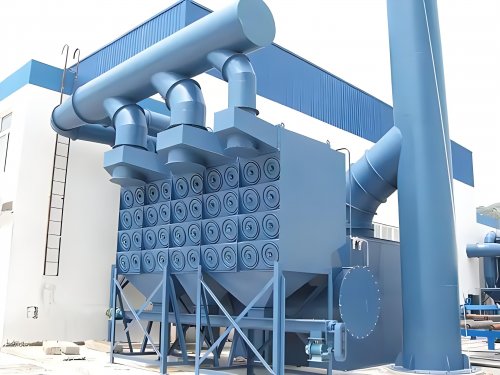
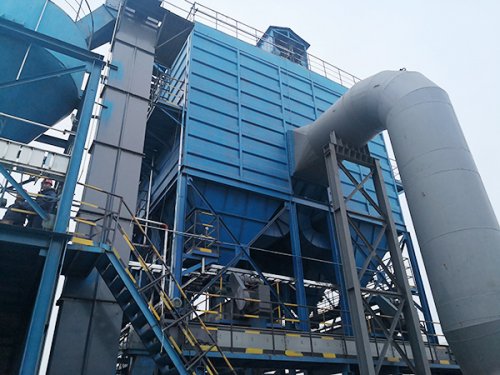
A baghouse dust collector — also referred to as a fabric filter dust collector — uses long, cylindrical filter bags made from woven or felted textile media to capture dust particles from an airstream. Contaminated air enters the collector housing and passes through the outside surface of the filter bags. Dust accumulates on the outer surface of the bags while clean air exits through the interior of the bags and is discharged.
The filtration mechanism in a baghouse relies on two principles working simultaneously. As particles deposit on the filter media surface, they form a dust cake that itself acts as a secondary filtration layer, improving efficiency over time. Beneath the dust cake, the fabric media provides mechanical interception and inertial impaction for particles that penetrate the initial layer.
Baghouse collectors incorporate a cleaning mechanism — typically pulse jet, reverse air, or shaker — to periodically remove accumulated dust from the bag surfaces. In a pulse jet baghouse, short bursts of compressed air are injected into the top of each bag, creating a shock wave that dislodges the dust cake and allows it to fall into a hopper below. This periodic cleaning restores airflow with minimal interruption to operation.
Types of Baghouse Dust Collectors
Baghouse collectors are broadly classified by their cleaning mechanism and airflow configuration:
Reverse air baghouse: A secondary fan pushes clean air backward through the bags to release dust. This method is gentler on filter media and suits high-temperature applications.
Shaker baghouse: Mechanical agitation physically vibrates the bag cage assembly to release dust. Simple in design but typically requires process interruption during cleaning cycles.
Pulse jet baghouse: Compressed air pulses clean the bags without halting airflow, enabling continuous operation. This is the most common configuration in modern industrial facilities.
Compact baghouse: A smaller-footprint version designed for space-constrained environments while retaining the durability of traditional baghouse construction.
How Does a Cartridge Dust Collector Work?
A cartridge dust collector uses cylindrical cartridge filters — compact cylindrical elements containing pleated filter media — instead of traditional fabric bags. The pleated geometry dramatically increases the filtration surface area within a given footprint, allowing cartridge collectors to achieve high airflow capacity in a comparatively small housing.
Contaminated air enters the collector and passes radially or axially through the pleated cartridge media. Particles are captured across the entire depth of the pleats, and clean air exits through an open central core. Periodically, compressed air pulses or mechanical agitation cleans the cartridges, similar in principle to baghouse cleaning but adapted for the denser geometry of pleated elements.
The primary performance distinction between cartridge and baghouse filtration lies in the media characteristics. Cartridge filters typically use cellulose, synthetic, or nanofiber media that offers a finer particle capture rating — often down to 0.3 microns — in a compact form. This makes cartridge collectors particularly effective for fine dust applications including welding fume, pharmaceutical powder, and food processing particulates.
Cartridge Dust Collector Components
Understanding the main components helps when specifying or maintaining a cartridge dust collection system:
Cartridge filter elements: Pleated filter media in cylindrical form, available in various materials rated for different particle sizes and chemical environments.
Housing: The enclosing structure that contains the filtration process, typically designed for negative pressure operation.
Fan or blower assembly: Draws contaminated air through the system and expels clean air. Fan sizing must match the total resistance of the filtration circuit.
Pulse cleaning system: Compressed air delivery system that periodically cleans cartridge elements to restore performance.
Dust hopper and discharge: Collects captured dust below the filter elements, typically equipped with a rotary valve or bin for continuous or batch discharge.
Control panel: Manages cleaning cycles, fan operation, and monitoring sensors for pressure differential and system status.
Baghouse vs Cartridge Dust Collector: Key Differences
While both systems accomplish particulate separation, the technical and operational differences are meaningful enough to influence system selection significantly.
Filtration Area and Footprint
Cartridge filters deliver significantly more filtration area per unit volume than bag filters due to their pleated geometry. A single standard cartridge filter may provide several square meters of media in a compact cylindrical form. Bag filters, by contrast, require long cylindrical shapes and larger housings to achieve equivalent airflow. For facilities with limited floor space, cartridge dust collectors offer a meaningful footprint advantage.
Particle Size Efficiency
Modern cartridge filters with fine-pleat or nanofiber media can achieve collection efficiency exceeding 90% for particles at 0.3 microns and larger. The depth-loading characteristic of pleated media also handles sub-micron particles effectively. Baghouse filters excel at handling high dust loads and coarse to medium particle sizes, but achieving comparable fine-particle efficiency often requires finer media specifications and higher pressure drops.
Airflow and Pressure Drop
Baghouse collectors generally handle higher airflow volumes more economically, making them the standard choice for large-scale applications such as cement kilns, steel mills, and power plant flue gas handling. Cartridge collectors are optimized for medium-to-high airflow with lower-to-moderate dust loads. As filters load with dust, both systems experience increasing pressure drop, but cartridge elements typically reach end-of-life pressure drop sooner due to their denser media structure.
Filter Media Temperature and Chemical Compatibility
Bag filters support a wider range of high-temperature and chemically aggressive media options. Specialty fibers such as Nomex, PTFE, and fiberglass allow baghouse collectors to operate in environments exceeding 260°C (500°F). Cartridge filter media is generally limited to lower temperature ranges, though specialty cartridges do exist for elevated temperature applications. Chemical compatibility must be evaluated carefully for both technologies depending on the process contaminants and cleaning method.
Maintenance and Filter Replacement
Cartridge filter replacement is typically faster and requires less labor than bag replacement — cartridges are lighter, easier to handle, and snap into place as complete assemblies. Bag filter replacement involves removing old bags, handling potentially damaged cage wires, and installing new bags with proper sealing. However, cartridge systems generally require more frequent replacement in heavy dust load applications, while baghouse systems can operate longer between changes due to higher dust-holding capacity.
Applications: Where Each Technology Performs Best
Ideal Applications for Baghouse Dust Collectors
Baghouse dust collectors have established dominance in applications characterized by high temperatures, large airflow volumes, abrasive particles, and high dust concentrations:
Cement and aggregate processing: Baghouse collectors handle the high temperature kiln exhaust and the abrasive nature of cement dust effectively.
Steel and metal production: Blast furnace gas cleaning, foundry sand handling, and steelmaking operations benefit from baghouse capacity for high-volume, high-temperature airstreams.
Power generation: Flue gas desulfurization and ash handling systems frequently employ baghouse filtration for their ability to handle large volumes at elevated temperatures.
Chemical and petrochemical processing: Applications requiring specialty filter media for corrosive or high-temperature process gases.
Woodworking and biomass: Medium-to-large woodworking facilities handling sawdust and wood chip processing.
Ideal Applications for Cartridge Dust Collectors
Cartridge dust collectors are better suited to applications where fine particle capture, space efficiency, and media versatility are primary concerns:
Welding and metal fabrication: Effective capture of fine welding fume particles at 0.3 microns and below, meeting stringent occupational exposure limits.
Pharmaceutical and food processing: Cleanroom-compatible filtration that meets strict hygiene and particulate standards.
Laser and plasma cutting: Captures the fine metallic oxide particles generated during thermal cutting processes.
Surface finishing and coating: Spray booths and finishing operations requiring high-efficiency capture of paint overspray and powder coating particles.
Injection molding and plastics: Captures polymer dust and fumes from plastic processing operations.
Composite manufacturing: Handles the fine fiber and resin dust characteristic of composite material production.
Selection Criteria: Choosing the Right Dust Collection System
No single technology is universally superior. The right choice depends on a systematic evaluation of your facility's specific conditions and operational requirements.
Particle Characteristics
Start by analyzing the dust or particulate you need to capture. Key questions include average particle size distribution, particle shape and density, abrasiveness, hygroscopic properties, and whether the dust poses a combustible dust hazard. Fine, respirable particles with diameters below 5 microns favor cartridge systems with high-efficiency media. Coarse, heavy, or abrasive particles suit baghouse collectors that can handle the mechanical loading without rapid media degradation.
Airflow Requirements
Calculate the total airflow your process generates in cubic meters per hour (CMH) or cubic feet per minute (CFM). Applications requiring very high airflow — typically above 10,000 CFM — generally favor baghouse technology for cost-effectiveness. Medium airflow ranges between 500 and 10,000 CFM frequently see cartridge collectors specified due to their compact efficiency.
Operating Temperature
The temperature of the contaminated airstream is a hard constraint. Baghouse systems handle temperatures from ambient up to approximately 260°C (500°F) with standard media, and specialty constructions can reach beyond 370°C (700°F). Cartridge systems typically operate from ambient to around 120°C (250°F) with standard media. Exceed these limits and filter failure, efficiency loss, or fire risk increases dramatically.
Space Constraints
Evaluate the physical space available for collector installation. Cartridge collectors offer a smaller footprint per unit of airflow due to their high media density. If ceiling height and floor space are limited, cartridge technology may be the only viable option without major facility modifications.
Maintenance Capabilities
Consider your maintenance team's capacity and the planned maintenance interval. Cartridge systems offer faster filter changes but may require more frequent attention in heavy-dust environments. Baghouse systems tolerate longer filter life but involve more labor per replacement. Also consider the availability and cost of replacement filters in your region and the lead time for specialty media specifications.
Compliance and Emission Standards
Local environmental regulations and occupational health standards influence minimum filtration efficiency requirements. Areas with strict PM2.5 or respirable dust limits may mandate high-efficiency cartridge systems regardless of other factors. Combustible dust applications require careful evaluation against NFPA standards for dust collection, which affects housing design, spark detection, and fire suppression integration.
Customization and System Integration
Industrial dust collection is rarely a plug-and-play purchase. Successful installations typically require some level of customization to match the collector to the specific process conditions and facility layout.
Common customization areas include inlet and outlet ducting design, hopper geometry for dust discharge, noise attenuation for fan assemblies, fire and explosion protection systems (such as suppression canisters and spark detection), automated dust discharge systems (rotary valves, screw conveyors), and integration with existing building management or process control systems.
When specifying a custom dust collection system, reputable manufacturers typically request the following information from buyers: process type and dust characteristics, peak and average airflow requirements, operating temperature range, available installation space and ceiling height, duct routing constraints, electrical supply specifications, any applicable compliance standards, and whether continuous or batch dust discharge is required. Providing detailed technical input early in the specification process significantly reduces the risk of mismatch between system capability and operational need.
Operating Costs and Lifecycle Considerations
Beyond the initial purchase price, evaluating total cost of ownership requires accounting for energy consumption, filter replacement costs, maintenance labor, and downtime associated with filter changes.
Energy costs dominate the operational expenditure of dust collection systems. As filter media accumulates dust, pressure drop increases and fan energy consumption rises proportionally. A well-designed pulse jet baghouse or cartridge collector should maintain stable pressure drop through most of the filter lifecycle, but inadequate cleaning, improper media selection, or excessive dust loading will cause energy costs to climb. Selecting the right filter media for your specific dust characteristics and matching fan sizing to actual system resistance are the two most effective strategies for controlling energy costs.
Filter replacement costs vary significantly by media type and dust load. Specialty media such as PTFE membrane or stainless steel mesh for baghouse applications carries a premium but may justify itself through extended service life or improved efficiency. In cartridge systems, the higher media density of nanofiber pleats provides superior fine-particle efficiency but at increased cost compared to standard cellulose cartridges.
Conclusion
Both baghouse dust collectors and cartridge dust collectors serve essential roles in industrial air quality management, and the choice between them is driven by your specific operational conditions rather than any inherent superiority of one technology over the other.
Baghouse collectors excel in high-temperature, high-volume, and heavy-dust applications across cement, steel, power, and chemical processing — environments where their robust filter media, high dust-holding capacity, and scalable design provide proven reliability. Cartridge collectors shine in fine-particle applications, space-constrained facilities, and processes requiring high-efficiency capture of respirable dust such as welding fume, pharmaceutical powder, and surface finishing operations.
The selection process should begin with a clear characterization of your dust — particle size, concentration, temperature, and chemical properties — combined with a precise measurement of your airflow requirements. From there, evaluate space constraints, maintenance capabilities, compliance obligations, and lifecycle cost projections to narrow the choice. When in doubt, consulting with a dust collection specialist who can conduct airflow modeling and media compatibility testing will prevent costly mismatches and ensure your system performs reliably from day one through the full duration of its operational life.
FAQ
What is the main difference between a baghouse and a cartridge dust collector?
The fundamental difference lies in the filtration medium geometry. Baghouse collectors use long cylindrical fabric bags that capture dust on their outer surface, while cartridge collectors use pleated cylindrical filter cartridges that capture particles throughout the depth of the pleated media. This geometric difference affects filtration efficiency, footprint, airflow capacity, and maintenance characteristics.
Which type of dust collector is better for fine particles like welding fume?
Cartridge dust collectors are generally better suited for fine particle capture, particularly for respirable particles in the sub-5-micron range. High-efficiency cartridge filters with nanofiber or PTFE media can achieve capture ratings down to 0.3 microns, which is typically required to meet occupational exposure limits for welding fume and similar fine particulate hazards.
Can a dust collector handle high-temperature airstreams?
Baghouse dust collectors handle high-temperature airstreams more effectively. Standard baghouse filter media accommodates temperatures up to approximately 260°C (500°F), with specialty materials such as fiberglass or ceramic fiber extending capability beyond 370°C (700°F). Cartridge filters are generally limited to lower temperature ranges, though some specialty cartridge options exist for moderately elevated temperatures.
How often do filters need to be replaced in baghouse and cartridge dust collectors?
Replacement frequency depends on dust load, particle characteristics, and operating conditions. Under heavy dust loading conditions, cartridge filters may require replacement every 3 to 12 months, while baghouse filters in similar conditions may last 1 to 3 years or longer. Light-dust environments can extend filter life significantly in both technologies. Monitoring pressure drop across the filters is the most reliable method for determining optimal replacement timing.
What safety considerations apply to industrial dust collection systems?
Combustible dust hazards require specific engineering controls including explosion-proof housings, spark detection and suppression systems, and compliance with standards such as NFPA 68 (explosion venting) and NFPA 654 (preventing fire and dust explosions from combustible particulate solids). All dust collection systems should include appropriate personal protective equipment provisions, regular housekeeping to prevent dust accumulation, and locked-out/tagged-out procedures during filter maintenance.
What information should I provide when requesting a quote for a dust collection system?
A detailed quote request should include the type of process generating dust, particle size distribution and dust concentration, peak and average airflow (CFM or CMH), inlet gas temperature and any temperature fluctuations, chemical properties of the dust (corrosive, hygroscopic, combustible), available installation space and ceiling height, applicable emission standards and occupational exposure limits, and whether continuous or intermittent dust discharge is required.
References
National Fire Protection Association. NFPA 654: Standard for the Prevention of Fire and Dust Explosions from the Manufacturing, Processing, and Handling of Combustible Particulate Solids. NFPA, 2023.
Occupational Safety and Health Administration. Controlling Occupational Exposure to Hazardous Dusts and Particulates. OSHA Technical Manual, Section III, Chapter 1. U.S. Department of Labor.
American Society of Heating, Refrigerating and Air-Conditioning Engineers. ASHRAE Handbook — HVAC Systems and Equipment. Chapter 28: Air-Cleaning Devices and Systems. ASHRAE, 2020.
Environmental Protection Agency. Control of Dust from Material Handling, Crushing and Screening Operations. EPA-450/3-80-043.
Specification Forum International. Standard Practice for Specification and Testing of Industrial Dust Collection Equipment. SFI Technical Guide TG-2019.
 Recommended Products
 Contact Us
—— Consultation Hotline: +86 17331708686
—— WhatsApp:+8617331708686
—— Email: lujingya66@163.com
—— Website:https://www.jiuzhoudust.com
—— Address: Siying Development Zone, Botou City, Hebei Province, China