






NewsCenter
Baghouse Dust Collector Working Principle: How Fabric Filtration Captures Industrial Dust
Author: jiuzhoudust Date: 2026-09-16 10:38:35 Views: 75
Industrial processes such as metalworking, cement production, woodworking, and bulk powder handling generate substantial volumes of airborne particulate. Left uncontrolled, this dust contaminates the work environment, accelerates equipment wear, and pushes facilities toward non-compliance with occupational and environmental emission standards. A baghouse dust collector remains one of the most reliable and widely deployed technologies for removing fine and coarse particulates from large process gas streams. This article explains how a baghouse works, the different cleaning mechanisms available, and the engineering factors that determine its performance in real industrial conditions.
What Is a Baghouse Dust Collector?
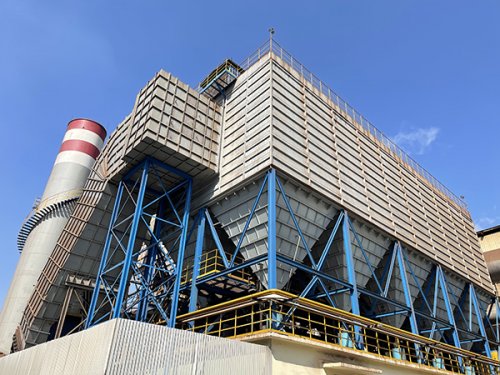
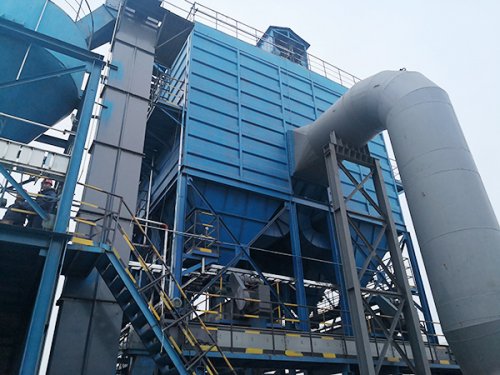
A baghouse, also called a fabric filter, is an air pollution control device that separates dust particles from a gas stream by passing it through woven or felted fabric filter bags. The housing contains a tube sheet that divides the dirty air chamber from the clean air plenum, with each bag mounted and sealed at the tube sheet. As contaminated air is forced through the fabric, particles are retained on the bag surface while cleaned gas exits through the open end of the bag into the clean plenum.
Baghouses are favored in heavy industrial applications because they handle high temperatures, large airflow volumes, and abrasive or high-loading dust streams that would quickly blind many other filtration technologies. The retained dust is periodically removed by a cleaning system and dropped into a hopper for disposal or recovery. Understanding the baghouse dust collector working principle begins with the step-by-step path that air and dust follow through the system.
Step-by-Step Working Principle
Contaminated Air Intake
Dust-laden air is drawn or pushed into the baghouse from the process source through ductwork, often connected to capture hoods, conveyor transfers, or process equipment such as grinders and mixers. The inlet is designed to distribute the flow and, where possible, to settle the coarsest particles before they reach the bags, reducing the load on the fabric media. In many designs an inlet baffle or pre-separator protects the bags from direct high-velocity impingement that could cause premature abrasion.
Filtration Through Fabric Bags
Once inside the dirty air chamber, the gas is drawn through the walls of the filter bags. In external-cake (outside-in) designs, which are common for pulse jet units, the dust is deposited on the outside of the bag while clean gas passes through the fabric and out the open top. In internal-cake (inside-out) designs used by some reverse air and shaker units, the dust collects on the inner surface. Either way, the fabric acts as the primary barrier, but the real filtration work is performed by the dust layer that builds up on the media.
Dust Cake Formation
The first particles captured by a clean bag lodge in the fibers of the fabric. As more dust accumulates, a porous layer known as the dust cake or filter cake forms on the surface. Counterintuitively, this cake improves collection efficiency because it becomes the dominant filtering medium for increasingly fine particles. The trade-off is resistance: as the cake thickens, it restricts airflow and raises the pressure drop across the system. Managing the balance between a beneficial cake and excessive pressure drop is central to baghouse operation.
Pulse Jet Cleaning Cycle
In a pulse jet baghouse, a short burst of compressed air is injected through a blow pipe into the top of each bag, expanding the fabric and flexing it from the inside outward. This dislodges the dust cake, which falls into the hopper below. The pulse is brief, typically a fraction of a second, and is triggered by a timer or by a differential pressure setpoint. Because cleaning happens while the system keeps running, pulse jet baghouses provide continuous filtration without taking compartments offline.
Clean Air Discharge
The filtered gas collects in the clean air plenum above the tube sheet and is discharged through an exhaust stack or recirculated into the plant, depending on the application and local air quality requirements. A fan or blower creates the necessary draft and overcomes the resistance of the filter media, ductwork, and any downstream components. The collected dust in the hopper is removed via a rotary airlock valve, screw conveyor, or similar device to maintain continuous operation.
Types of Baghouse Cleaning Systems
The three principal cleaning mechanisms differ in how they regenerate the filter media and how they balance continuous operation against cleaning effectiveness.
Pulse Jet
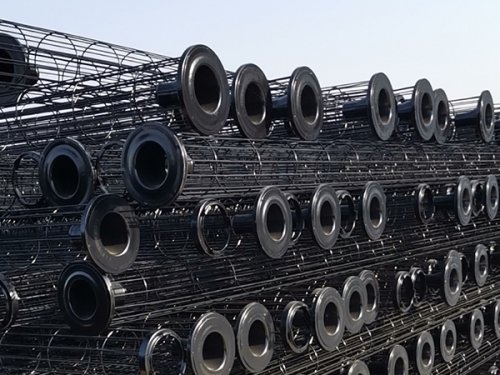
Pulse jet cleaning uses high-pressure compressed air injected directly into each bag from the clean side. It offers online cleaning, compact footprint, and high air-to-cloth ratios, making it suitable for a wide range of dusts and process loads. The bags are supported by wire cages to prevent collapse during the pressure pulse. Pulse jet designs are common where floor space is limited and continuous operation is required.
Reverse Air
Reverse air cleaning directs a lower-velocity stream of cleaned gas backward through a compartment of bags, collapsing the fabric gently and causing the dust cake to fall away. Because the reverse flow is low pressure, cleaning is usually done compartment by compartment while other sections keep filtering. Reverse air units often use longer bags and are well suited to very large volumes and high-temperature applications such as power generation and kiln exhaust.
Shaker
Shaker baghouses clean the media by mechanically shaking the bags, typically with the compartment taken offline. The motion dislodges the dust cake so it drops into the hopper. Shaker designs are simpler and use no compressed air, but they generally require offline cleaning and are better matched to moderate airflow and lower dust-loading applications.
Filter Media Selection and Performance Factors
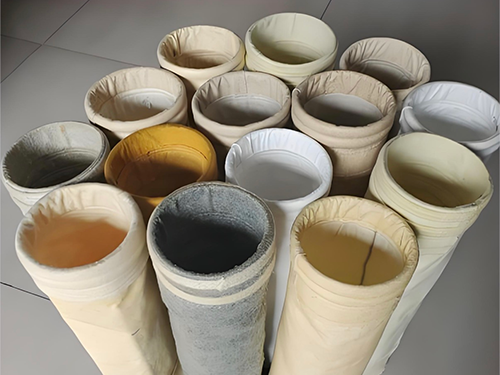
The choice of filter media determines temperature tolerance, chemical resistance, and collection efficiency. Common fabrics include polyester for general service, polypropylene for moisture and chemical resistance, aramid for high-temperature duty, fiberglass for elevated temperatures, and polytetrafluoroethylene for aggressive chemical environments. Media may be woven or felted; felted (nonwoven) media provides higher initial efficiency and is typical for pulse jet systems.
Key performance factors are the air-to-cloth ratio, the differential pressure across the bags, the particle size distribution, and the dust's tendency to agglomerate or cake. Too high an air-to-cloth ratio overloads the media and shortens bag life, while too low a ratio increases capital cost. Media finish treatments such as singeing, calendering, or membrane lamination can improve release characteristics and fine-particle capture.
Key Components Overview
A functional baghouse integrates several engineered components:
The filter bags and their supporting cages provide the filtration surface. The tube sheet separates dirty and clean air and seals each bag. The hopper collects dislodged dust and channels it to discharge equipment. The blow pipes and compressed air manifold deliver cleaning pulses in pulse jet designs. A differential pressure gauge monitors filter loading, and a fan or blower supplies the required draft. Safety components such as explosion vents or isolation devices may be required for combustible dusts per applicable standards.
Common Applications
Baghouses serve industries with high dust loads and demanding duty cycles. Typical applications include cement and lime plants, metal smelting and foundries, woodworking and panel production, pharmaceutical and food powder handling, chemical processing, power generation, and asphalt mixing. Where process gas is hot, abrasive, or heavily loaded, the baghouse is frequently the default choice because of its robustness and predictable performance.
Operating Considerations
Effective operation depends on monitoring differential pressure and maintaining it within a target band. Excessive pressure drop signals blinding or cake buildup, while too-frequent cleaning wastes compressed air and accelerates bag wear. Airflow must stay balanced so no compartment is overloaded. Temperature control protects media from thermal damage and prevents condensation that can blind bags. For combustible dusts, facilities must address explosion hazards through recognized safeguards referenced in standards such as NFPA 654.
FAQ
How efficient is a baghouse dust collector?
Fabric filter baghouses routinely achieve high collection efficiencies across a broad particle size range, including submicron particles, when properly designed and maintained. Actual efficiency depends on media selection, air-to-cloth ratio, and cleaning discipline rather than on a single fixed figure.
What is the difference between pulse jet and reverse air cleaning?
Pulse jet cleaning uses short, high-pressure compressed air pulses for online cleaning of individual bags, while reverse air uses a low-velocity reverse gas flow to clean entire compartments, usually offline. Pulse jet units are more compact; reverse air units suit very large volumes and high temperatures.
How often should filter bags be replaced?
Bag life varies widely with dust characteristics, temperature, cleaning frequency, and chemistry, ranging from roughly one year to several years. Differential pressure trends and visual inspection during maintenance are the practical indicators for replacement timing.
Can a baghouse handle high-temperature gas?
Yes, with appropriate high-temperature media such as fiberglass or aramid and adequate temperature management. Inlet gas may require cooling through air-to-air heat exchangers or dilution before it reaches the bags.
Conclusion
The baghouse dust collector working principle rests on a simple but effective idea: force dust-laden gas through fabric, let a dust cake form to refine filtration, and periodically clean the media to sustain airflow. Selecting the right cleaning mechanism, filter media, and operating parameters determines whether a baghouse delivers reliable, compliant performance or becomes a maintenance burden. For plants evaluating dust control, a properly specified baghouse remains a proven foundation for protecting workers, equipment, and the environment.
References
U.S. Environmental Protection Agency. Fabric Filter Baghouses. EPA Air Pollution Control Technology Fact Sheet.
Occupational Safety and Health Administration. OSHA Technical Manual (OTM), Section III: Chapter 3, Ventilation.
National Fire Protection Association. NFPA 654: Standard for the Prevention of Fire and Dust Explosions from the Manufacturing, Processing, and Handling of Combustible Particulate Solids.
American Society of Heating, Refrigerating and Air-Conditioning Engineers. ASHRAE Handbook—HVAC Applications, Air Contaminants and Air Cleaners.
 Recommended Products
 Contact Us
—— Consultation Hotline: +86 17331708686
—— WhatsApp:+8617331708686
—— Email: lujingya66@163.com
—— Website:https://www.jiuzhoudust.com
—— Address: Siying Development Zone, Botou City, Hebei Province, China