






NewsCenter
Cartridge Dust Collector Working Principle: Pleated Filtration Technology for Fine Particle Control
Author: jiuzhoudust Date: 2026-09-19 10:47:07 Views: 112
Many industrial operations produce fine, light, or fibrous dust that is difficult to capture with conventional fabric filter bags. Welding fume, laser and plasma cutting smoke, pharmaceutical and food powder, and metalworking dust often consist of particles small enough to stay suspended in air for long periods. The cartridge dust collector addresses this challenge with pleated filter elements that pack a large media area into a compact footprint. This article explains the cartridge dust collector working principle, the filtration mechanism behind pleated media, and the factors that govern its performance.
What Is a Cartridge Dust Collector?
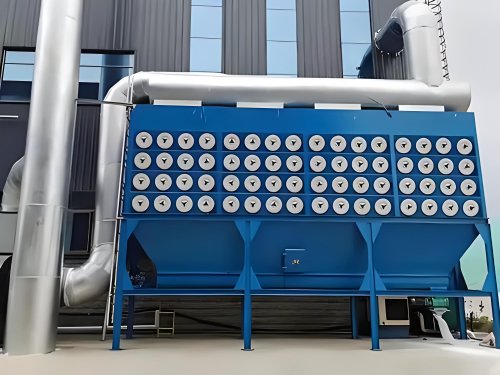
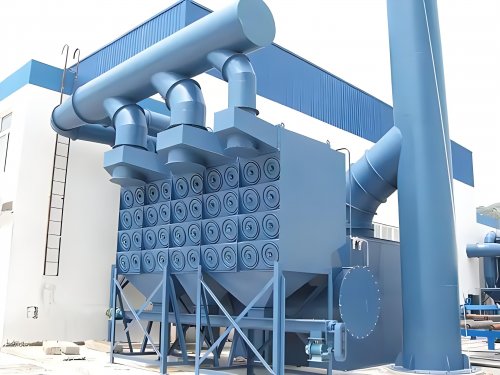
A cartridge dust collector is a type of fabric filter that uses cylindrical or oval pleated filter cartridges instead of long tubular bags. The pleated design dramatically increases the available filtration area for a given volume of housing, allowing a smaller unit to handle the same airflow as a much larger baghouse. Dirty air typically flows from the outside of the cartridge to the inside, where cleaned gas exits through the open core and into the clean air plenum.
Because of their high media area and low air-to-cloth ratios, cartridge collectors excel at capturing fine and submicron particulate while occupying limited floor space. They are commonly installed indoors near the process, making them a practical choice for workshops, manufacturing cells, and facilities where space and filtration efficiency are both critical constraints.
Step-by-Step Working Principle
Air Intake and Dust Distribution
Contaminated air enters the collector housing through an inlet designed to slow the incoming stream and distribute it evenly across the cartridges. Where possible, the inlet geometry promotes the settling of heavier particles before they reach the media, reducing the load on the filter surface. Even distribution matters because uneven flow causes some cartridges to overload while others remain underused, shortening overall filter life.
Pleated Media Filtration Mechanism
Air is drawn through the pleated media from the outside toward the central core. The pleats present a large, folded surface that intercepts particles as the gas passes through the fibers. Mechanisms at work include inertial impaction, interception, diffusion for the smallest particles, and, where a membrane or nanofiber layer is present, sieving at the surface. The pleated geometry keeps face velocity low, which improves capture of fine particles and reduces the energy needed to move air through the media.
Depth Loading vs Surface Loading
Dust capture can occur in two ways. In depth loading, particles penetrate into the body of the media and are trapped within the fiber matrix. This provides good initial efficiency but can raise pressure drop quickly as the interior fills. In surface loading, particles accumulate on the outside of the media, forming a cake that is easily pulsed off during cleaning. Modern cartridge media, especially those with nanofiber or membrane surfaces, are engineered to promote surface loading so that cleaning stays effective and pressure drop remains stable over time.
Pulse Cleaning of Cartridge Elements
Like pulse jet baghouses, cartridge collectors use short bursts of compressed air to clean the media. A pulse of air travels down a venturi at the top of each cartridge, expanding the pleats from the inside outward and blowing the dust cake off the exterior surface. The released dust falls into the hopper below. Cleaning is triggered by a timer or by a differential pressure setpoint, allowing the unit to keep running while individual cartridges are regenerated.
Clean Air Exhaust
Filtered gas exits through the open core of each cartridge into the clean air plenum and is discharged through the exhaust. Depending on the application and local requirements, the cleaned air may be vented outdoors or recirculated into the workspace. A fan provides the draft and overcomes the resistance of the media, inlet, and ductwork. Collected dust is removed from the hopper through a rotary airlock or similar discharge device to keep the system running continuously.
Cartridge Filter Components
A cartridge filter element consists of several integrated parts. The pleated media is the filtration surface, supported by an inner core that maintains the cylindrical shape and provides the clean air passage. End caps seal the element and determine the mounting style, while gaskets prevent bypass of dirty air around the cartridge. A venturi at the open end helps direct the cleaning pulse into the core. The construction must resist collapse under suction and tolerate the process temperature and chemistry.
Filter Media Types and Efficiency Ratings
Cartridge media come in several formulations. Cellulose is an economical general-purpose option. Spunbond polyester offers greater durability and moisture resistance. Nanofiber media places an ultra-fine fiber layer on the surface to boost fine-particle capture and promote surface loading. PTFE membrane media delivers very high efficiency and excellent release for sticky or difficult dusts.
Efficiency is commonly described using rating systems such as MERV for general air filtration and HEPA for the highest capture classes. For industrial cartridge collectors, the practical measure is how well the element maintains efficiency at a given pressure drop over its service life. A membrane or nanofiber surface typically sustains higher efficiency than untreated media because it prevents deep penetration of fine dust.
Cartridge vs Traditional Bag Filters
Cartridge and baghouse collectors share the same fundamental fabric filtration principle but suit different duties. Cartridge elements provide far more media area per unit volume, enabling a smaller, often indoor-installation footprint and lower face velocity, which benefits fine dust capture. Baghouses handle higher temperatures, heavier dust loadings, and more abrasive or moist streams because of the broader range of bag media and larger, more robust construction.
In practice, cartridge collectors are preferred for fine, dry, moderate-loading dust where space is tight, while baghouses remain the choice for high-temperature, high-volume, or heavily loaded applications. The decision should follow the dust characteristics and duty cycle rather than a general preference for one technology.
Applications and Use Cases
Cartridge dust collectors are widely used wherever fine airborne particulate is generated. Common settings include welding and metal fabrication, laser and plasma cutting, grinding and deburring, pharmaceutical and nutraceutical powder handling, food and beverage processing, powder coating booths, and woodworking. They are also common in laboratories and clean-adjacent environments where maintaining air quality is essential to product integrity.
Selection Considerations
Selecting a cartridge collector starts with the dust itself: particle size distribution, loading rate, moisture content, and explosibility. Fine dust benefits from nanofiber or membrane media and a conservative air-to-cloth ratio. High loadings require a larger media area or pre-separation. Temperature and chemical exposure dictate the media and seal materials. Facilities must also account for static pressure, available compressed air for cleaning, and, for combustible dusts, the safety measures referenced in applicable standards such as NFPA 654.
Maintenance Best Practices
Sustained performance depends on routine attention. Monitor differential pressure to detect blinded or damaged cartridges before efficiency falls. Verify compressed air quality and pressure so cleaning pulses are effective. Inspect seals and gaskets to prevent bypass. Replace cartridges according to pressure trends and visual condition rather than a fixed calendar date alone. Keep the hopper discharging freely and avoid overfilling, which can re-entrain dust back into the airstream.
FAQ
What is the main advantage of a cartridge dust collector?
The pleated design delivers a large filtration area in a compact housing, so the collector captures fine particles efficiently while occupying less floor space than a comparable baghouse. This makes it well suited to indoor installation and fine-dust applications.
How does a cartridge filter differ from a bag filter?
A cartridge uses folded pleated media in a short, wide element, while a bag is a long tubular fabric sleeve. Cartridges offer more area per volume and lower face velocity; bags tolerate higher temperatures and heavier, more abrasive dust loads.
What does surface loading mean for filter life?
Surface loading means dust collects on the outside of the media and is easily pulsed off, keeping pressure drop stable and extending service life. Depth loading, where dust penetrates the media, tends to blind the filter faster.
Are cartridge collectors suitable for explosive dusts?
They can be applied to combustible dusts when designed with appropriate explosion protection and documented safety measures per recognized standards. The specific safeguards depend on the dust's explosibility and the operating conditions.
Conclusion
The cartridge dust collector working principle combines pleated media geometry with pulse cleaning to capture fine particles efficiently in a small footprint. By promoting surface loading and maintaining low face velocity, cartridge elements deliver strong filtration performance for welding fume, cutting smoke, and powders that challenge conventional bags. Selecting the right media, air-to-cloth ratio, and maintenance routine lets facilities control fine particulate, protect indoor air quality, and meet their operational and compliance goals.
References
U.S. Environmental Protection Agency. Air Pollution Control Technology Fact Sheet: Fabric Filter Cartridge Collectors.
Occupational Safety and Health Administration. OSHA Technical Manual (OTM), Section III: Chapter 3, Ventilation.
National Fire Protection Association. NFPA 654: Standard for the Prevention of Fire and Dust Explosions from the Manufacturing, Processing, and Handling of Combustible Particulate Solids.
American Society of Heating, Refrigerating and Air-Conditioning Engineers. ASHRAE Handbook—HVAC Applications, Air Cleaners for Particulate Contaminants.
 Recommended Products
 Contact Us
—— Consultation Hotline: +86 17331708686
—— WhatsApp:+8617331708686
—— Email: lujingya66@163.com
—— Website:https://www.jiuzhoudust.com
—— Address: Siying Development Zone, Botou City, Hebei Province, China