






NewsCenter
Industrial Cartridge Dust Collector: Applications and Selection Guide
Author: jiuzhoudust Date: 2026-10-01 22:18:37 Views: 58
Fine particulate is the hardest dust to capture — and the most damaging to human health. Processes that generate sub-micron particles, fumes, and fine powders demand filtration technology that goes beyond what traditional baghouse systems can efficiently deliver. This is where cartridge dust collectors enter the picture. With pleated filter media packed into compact cylindrical cartridges, these systems deliver high filtration area per unit volume, making them the preferred choice for applications where space is limited, particle sizes are small, and air-to-media ratios need to be low.
For plant engineers, maintenance managers, and procurement teams, selecting a cartridge dust collector means understanding not just the equipment itself but how it performs across different industrial applications. This guide covers the common use cases, selection criteria, filter media options, and maintenance considerations that determine whether a cartridge collector succeeds or underperforms in your facility.
What Is a Cartridge Dust Collector?
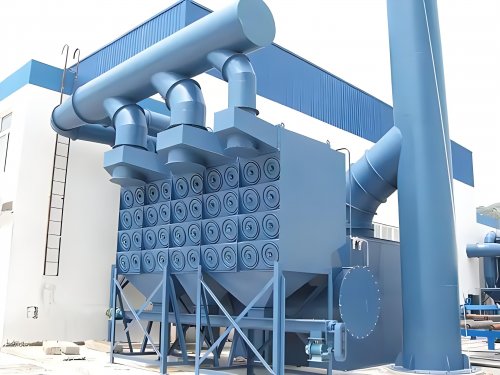
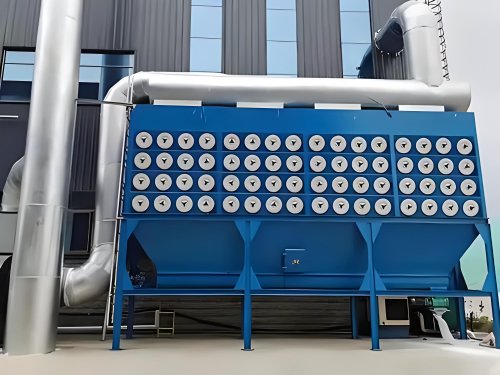
A cartridge dust collector is a dry filtration system that uses pleated filter cartridges instead of tubular bags as the filtration medium. Each cartridge consists of filter media — typically cellulose, synthetic, or blended — folded into pleats and bonded to end caps, forming a cylindrical element. The pleated design dramatically increases the available filter surface area within a given volume compared to a flat or tubular bag of the same envelope size.
Cartridge collectors operate on the same basic principle as baghouses: dirty air passes through the filter media, dust collects on the outer surface, and clean air exits through the core. Cleaning is typically accomplished via pulse-jet, with compressed air pulses dislodging the dust cake. The key difference is the geometry — cartridges offer 2 to 3 times the filtration area of a same-sized bag, which allows the collector to be physically smaller for a given airflow.
Most cartridge collectors are designed for lower to medium air volumes — roughly 1,000 to 30,000 m³/h — though larger modular units can handle significantly more. They are particularly effective on fine, low-loading dust streams, which describes a wide range of industrial processes.
Common Applications
Welding and Metal Fabrication
Welding operations generate sub-micron metal fumes that are both toxic and difficult to capture. Cartridge collectors, often configured as portable or wall-mounted units with extraction arms, are the standard solution for welding smoke control. The fine particulate from arc welding — including manganese oxide, iron oxide, and other metal compounds — is effectively captured by cellulose or synthetic blend cartridges with nano-coatings.
In fabrication shops with multiple welding stations, centralized cartridge systems with ducted capture hoods are common. The low air-to-media ratio of cartridge filters handles the high filtration efficiency required for sub-micron fume without excessive pressure drop. For stainless steel welding applications that generate hexavalent chromium, specialized cartridge media with PTFE membranes may be specified to achieve the high collection efficiency required by OSHA exposure limits.
Pharmaceutical and Food Processing
Both pharmaceutical and food industries generate fine, recoverable powders that must be contained for product quality and worker safety. Cartridge collectors are favored here because their pleated design allows efficient capture of fine pharmaceutical powders — including active pharmaceutical ingredients (APIs) — while occupying less floor space than equivalent baghouse systems.
In food processing, cartridge collectors handle flour dust, sugar dust, spice powders, and other organic particulates. Because many food dusts are combustible, cartridge collectors in these applications must comply with NFPA 61 or NFPA 654 explosion protection standards. Washable cartridge designs with stainless steel housings are available for hygienic applications requiring regular clean-in-place (CIP) procedures.
Surface Finishing and Coating
Sanding, grinding, blasting, and powder coating operations generate fine particulate that must be captured at the source. Cartridge collectors serve both ambient and source-capture roles in finishing shops. For powder coating recovery, cartridge collectors with specialized media can capture and reclaim overspray powder for reuse — a function that requires precise filtration efficiency to prevent powder contamination.
Abrasive blasting generates heavy dust loads with abrasive particles that can wear filter media. In these applications, inlet pre-separators or cyclone precleaners are sometimes installed upstream of the cartridge collector to remove larger abrasive particles before they reach the cartridges, extending filter life.
Laser and Plasma Cutting
Thermal cutting processes — laser cutting, plasma cutting, and oxy-fuel cutting — produce fine metallic fume and oxide particles. The high-temperature nature of these particles means they can carry thermal energy into the filter, requiring consideration of gas cooling upstream of the collector in some cases. Cartridge collectors are widely used under cutting tables as downdraft filtration systems, drawing particulate-laden air through the cutting grate and through the cartridges.
The compact footprint of cartridge collectors is a particular advantage here, as the filtration system must fit within or adjacent to the cutting table structure. Cutting applications often involve mixed metal dusts, including mild steel, stainless steel, and aluminum, each with different combustion and toxicity characteristics that influence media selection and explosion protection requirements.
Plastics and Rubber Processing
Plastics compounding, pelletizing, and grinding generate dust that is often light, fluffy, and electrostatically charged. Cartridge collectors for plastics applications frequently use anti-static (conductive) media to prevent static accumulation on the filter surface, which can cause dust to cling and resist pulse cleaning. Grounding the collector housing and using conductive cartridge media are standard practices.
Rubber processing dust can be sticky and thermoplastic, requiring media selection that resists blinding. In some cases, precoating the cartridges with an inert powder before initial startup helps establish a release layer that prevents rubber dust from bonding to the media surface.
Composite Material Manufacturing
Carbon fiber, fiberglass, and advanced composite manufacturing generates fine fibrous dust that presents unique filtration challenges. The dust tends to interlock and form dense layers on filter surfaces, causing rapid pressure drop buildup. Cartridge collectors for composite applications often use spunbond polyester media with smooth surfaces that resist fiber adhesion, combined with aggressive pulse cleaning parameters.
Carbon fiber dust is also electrically conductive, requiring anti-static media and grounded housings. Some composite dusts are combustible, necessitating explosion protection per NFPA 652 or NFPA 654.
How to Select the Right Cartridge Dust Collector
Particle Size Requirements
Particle size is the starting point for selection. Most industrial dusts span a range of particle sizes, and the distribution — not just the average — determines filtration requirements. For dusts dominated by particles larger than 10 microns, standard cellulose cartridges are generally adequate. For sub-micron fume or fine powders, cartridges with nanofiber surface coatings or PTFE membranes achieve higher capture efficiency at lower pressure drop.
Request a particle size analysis from your dust supplier or conduct sampling if the dust is generated in-house. The analysis should report both the mass median diameter and the percentage of fines below 2.5 microns. This data directly informs media selection.
Airflow and Sizing
The collector must handle the process airflow with an appropriate air-to-media ratio — sometimes called filtration velocity. For cartridge collectors, this ratio typically ranges from 0.5 to 1.2 m/min, depending on the dust characteristics. Lower ratios are specified for fine, sticky, or high-loading dusts; higher ratios are acceptable for coarse, free-flowing dust.
Sizing by airflow alone is insufficient. The system must also handle the peak dust load — the maximum rate of dust generation — without allowing pressure drop to exceed the fan's capability. Undersized collectors spend more time in cleaning mode, which increases compressed air consumption and shortens cartridge life.
Filter Media Compatibility
Media compatibility involves both chemical resistance and temperature tolerance. Cellulose media, the most economical option, is suitable for dry, non-corrosive dust at temperatures below 65°C. Synthetic polyester media handles higher temperatures (up to about 130°C continuous) and offers better moisture resistance. For corrosive environments, PTFE-coated media or specialty blends are available.
If the dust contains oils, resins, or moisture, standard media will blind quickly. In these cases, oleophobic (oil-repellent) treatments or PTFE membrane cartridges are necessary. The membrane creates a smooth surface that prevents fine or sticky particles from embedding in the media substrate.
Space and Mounting Constraints
One of the primary advantages of cartridge collectors is their compact footprint. However, the available space still dictates the configuration. Options include vertical cartridge orientation (cartridges hang downward, best for sticky dust that needs gravity assistance during cleaning), horizontal orientation (cartridges lie on their side, common in downdraft table applications), and modular arrangements that allow future expansion.
Access for cartridge replacement is a practical consideration that is often overlooked during selection. Vertical cartridges typically require overhead clearance equal to the cartridge length plus handling space. Horizontal designs may require access from one side. Ensure that the installation location allows a technician to remove and replace cartridges without disassembling ductwork or structural elements.
Compliance Requirements
Regulatory compliance drives many cartridge collector decisions. If the process is subject to EPA emission limits, the collector must achieve a verified outlet emission rate. OSHA exposure limits for specific contaminants (silica, hexavalent chromium, manganese) may dictate the filtration efficiency required. For combustible dust applications, NFPA standards require explosion protection measures — venting, suppression, or isolation — that add cost and complexity.
Document the applicable regulations before specifying the collector. The supplier needs this information to engineer appropriate safety features and select certified components.
Filter Media Options and Efficiency Ratings
Cartridge filter media is categorized by material, construction, and efficiency. The most common media types:
Cellulose — Wood pulp paper-based media. Lowest cost. Suitable for dry, non-abrasive, non-corrosive dust at ambient temperature. Limited moisture resistance. Typically rated for particles 2 microns and above.
Spunbond polyester — Synthetic non-woven media. Better temperature resistance than cellulose (continuous to approximately 130°C). Good chemical resistance to mild acids and alkalis. Moisture resistant. Available with anti-static treatments. The most versatile general-purpose cartridge media.
Polyester with nanofiber coating — A spunbond polyester substrate with a fine nanofiber layer applied to the surface. The nanofiber creates a pre-filter effect, capturing fine particles on the surface rather than allowing them to embed in the substrate. This extends cartridge life and reduces pressure drop in fine dust applications. Efficiency is typically MERV 15 or higher for sub-micron particles.
PTFE membrane — A microporous Teflon membrane laminated to a substrate. Provides the highest filtration efficiency for fine and sticky dusts. The membrane is hydrophobic and oleophobic, making it suitable for moisture- and oil-laden applications. Highest cost per cartridge, but longest service life in demanding applications.
Blended and specialty media — Custom blends for specific applications, including conductive media for electrostatic dusts, flame-resistant media for hot particle applications, and washable media for hygienic processes.
Efficiency ratings are commonly expressed as MERV (Minimum Efficiency Reporting Value) per ASHRAE 52.2, or as a percentage at a stated particle size. For industrial dust collection, MERV 14 to 16 covers most applications, with MERV 16 providing the highest efficiency for sub-micron particulate.
Maintenance Considerations by Application
Cartridge maintenance differs significantly from bag maintenance. Cartridges are replaced as complete units — there is no separate cage or media to service individually. This simplifies changeouts but means the entire cartridge is discarded when the media reaches end of life.
In welding applications, cartridges typically require replacement every 12 to 24 months, depending on duty cycle and fume loading. The pulse cleaning system handles most of the dust removal, but periodic manual cleaning or compressed air blow-off may be needed for cartridges handling sticky or thermoplastic fume.
For pharmaceutical and food applications, cartridge replacement intervals may be shorter due to strict hygiene requirements. Cartridges are often replaced during scheduled shutdowns rather than waiting for performance degradation. Washable cartridge designs allow cleaning and reuse, but the number of wash cycles is limited before media degradation reduces efficiency.
In abrasive applications like cutting and grinding, cartridge life is heavily influenced by the dust loading and the effectiveness of any pre-separation. Monitoring pressure differential is essential — a rising trend that does not respond to pulse cleaning indicates the cartridges are approaching end of life.
Across all applications, the compressed air supply for pulse cleaning must be clean and dry. Moisture in the compressed air is a leading cause of premature cartridge failure, particularly in applications where the dust is hygroscopic (moisture-absorbing).
Customization for Special Applications
Standard cartridge collectors handle the majority of industrial dust applications, but certain processes require customized configurations. High-temperature applications above 130°C may require ceramic or sintered metal cartridge elements, which operate at temperatures up to 400°C or higher but at significantly higher cost. Corrosive gas streams may require stainless steel housing construction with epoxy-coated internal components.
For processes with variable dust loads — such as batch operations — variable frequency drives on the fan motor allow airflow to modulate with demand, saving energy and reducing unnecessary filter loading during low-production periods. Integrated heat exchangers can cool hot gas streams upstream of the cartridge collector, extending media life.
Explosion protection is a customization that should be planned from the outset, not retrofitted. For combustible dust applications, the collector housing must include explosion relief vents sized per NFPA 68, an isolation valve on the dirty air inlet to prevent flame propagation upstream, and possibly an explosion suppression system. The cartridges themselves may need to be conductive and grounded to dissipate static charges that could serve as an ignition source.
Frequently Asked Questions
What is the difference between a cartridge dust collector and a baghouse dust collector?
The primary difference is the filter element geometry. Cartridge collectors use pleated cylindrical cartridges that pack more filter area into a smaller volume. Baghouses use tubular fabric bags supported by internal cages. Cartridge collectors are generally more compact, better suited for fine particulate and lower air volumes, and easier to service since the entire cartridge is replaced as a unit. Baghouses handle higher air volumes and heavier dust loads more effectively.
When should I choose a cartridge collector over a baghouse?
Choose a cartridge collector when your application involves fine particulate (sub-10 micron), moderate air volumes (typically below 30,000 m³/h), space constraints, or the need for high filtration efficiency in a compact package. Choose a baghouse for high air volumes, heavy dust loading, high temperature applications, or when the dust is abrasive and would rapidly wear pleated cartridge media.
How do I determine the correct air-to-media ratio for my application?
The air-to-media ratio depends on the dust characteristics. For light, fine, non-abrasive dust, a ratio of 0.8 to 1.2 m/min is typical. For sticky or high-loading dust, reduce to 0.5 to 0.8 m/min. Your dust supplier or a qualified collector manufacturer can provide a recommendation based on a dust sample analysis. In general, lower ratios extend cartridge life and reduce pressure drop at the cost of a larger (and more expensive) collector.
Can cartridge collectors handle combustible dust?
Yes, but the collector must be engineered for combustible dust compliance. This includes explosion venting per NFPA 68, isolation per NFPA 69, conductive media for static dissipation, and a housing designed to withstand the deflagration pressure. The system must also comply with NFPA 652 or the industry-specific standard (NFPA 61 for food, NFPA 654 for general combustible particulate solids). Combustible dust applications significantly increase collector cost but are non-negotiable for safety.
How long do cartridge filters last?
Cartridge life depends on the application, dust loading, cleaning effectiveness, and media type. In favorable conditions (low loading, compatible media, proper cleaning), cartridges may last 2 to 3 years. In aggressive applications (high loading, abrasive dust, thermal stress), life may be 6 to 12 months. Monitoring pressure differential trends is the most reliable method for predicting end of life — a sustained upward trend that does not respond to increased cleaning frequency indicates the cartridges need replacement.
Conclusion
Cartridge dust collectors occupy a critical niche in industrial air pollution control: fine particulate capture in a compact, efficient package. Their application spans welding fume, pharmaceutical powder, finishing dust, thermal cutting emissions, plastics processing, and composite manufacturing — each with distinct dust characteristics that drive media selection, sizing, and maintenance strategy. Selecting the right collector requires a clear understanding of particle size distribution, airflow requirements, media compatibility, space constraints, and regulatory obligations. When these factors are properly matched to the application, cartridge collectors deliver high-efficiency filtration with lower space requirements and simpler maintenance than alternative technologies.
References
EPA, "OAQPS Control Cost Manual, Chapter 9: Fabric Filters," U.S. Environmental Protection Agency, Office of Air Quality Planning and Standards.
ASHRAE Standard 52.2, "Method of Testing General Ventilation Air-Cleaning Devices for Removal Efficiency by Particle Size," American Society of Heating, Refrigerating and Air-Conditioning Engineers.
NFPA 654, "Standard for the Prevention of Fire and Dust Explosions from the Manufacturing, Processing, and Handling of Combustible Particulate Solids," National Fire Protection Association.
OSHA, "Ventilation and Local Exhaust Systems," OSHA Technical Manual, Section III, Chapter 3.
NFPA 652, "Standard on Fundamentals of Combustible Dust," National Fire Protection Association.
 Recommended Products
 Contact Us
—— Consultation Hotline: +86 17331708686
—— WhatsApp:+8617331708686
—— Email: lujingya66@163.com
—— Website:https://www.jiuzhoudust.com
—— Address: Siying Development Zone, Botou City, Hebei Province, China