






NewsCenter
Industrial Dust Collector Buying Guide: Selection Criteria, Sizing and Cost Considerations
Author: jiuzhoudust Date: 2026-09-22 11:20:32 Views: 122
A dust collection system is a capital investment that affects worker safety, regulatory compliance, equipment reliability, and operating cost for years after purchase. Choosing the wrong technology or undersizing the unit leads to persistent emissions, frequent filter changes, and energy waste, while oversizing inflates the initial budget without proportional benefit. This industrial dust collector buying guide walks B2B buyers through the technologies available, the criteria that should drive selection, how to size a system, and how to evaluate total cost of ownership before committing.
Why Industrial Dust Collection Matters
Dust control is not only a housekeeping concern. Airborne particulate exposes workers to respiratory hazards, and accumulations of combustible dust present fire and explosion risks that standards such as NFPA 654 address directly. Environmental regulations administered through programs such as EPA's National Emission Standards for Hazardous Air Pollutants set limits that a compliant collector must meet. Beyond compliance, effective dust collection protects machinery from abrasive wear, reduces fire risk, and helps maintain product quality in sensitive processes.
Types of Industrial Dust Collectors
Baghouse Collectors
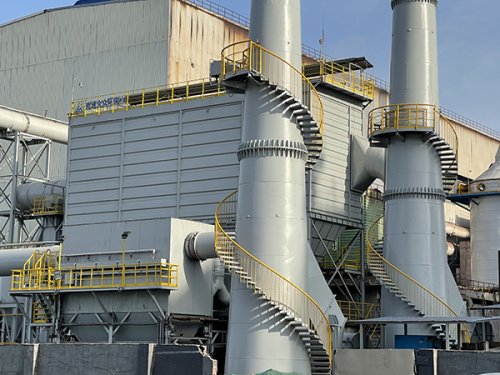
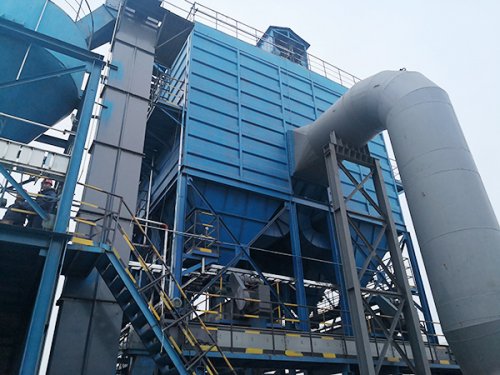
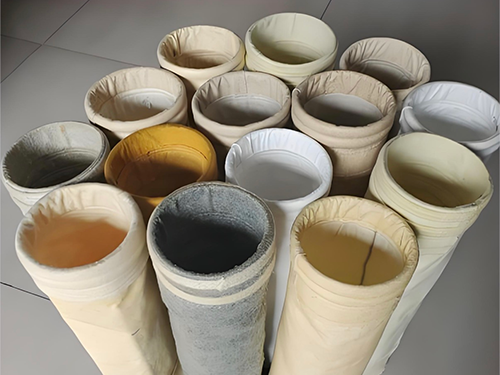
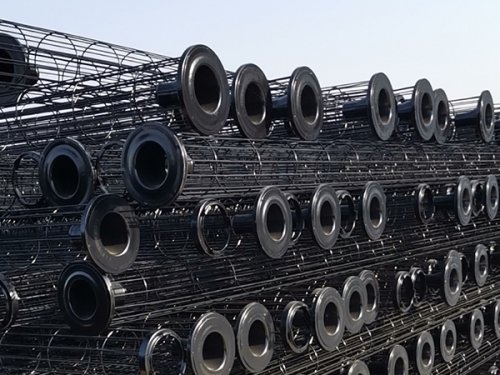
Baghouse or fabric filter collectors use long fabric filter bags to capture dust from high-volume gas streams. They tolerate high temperatures, abrasive dust, and heavy loadings better than most alternatives and are available with pulse jet, reverse air, or shaker cleaning. Baghouses are the workhorse choice for cement, metals, power, and bulk powder applications where duty is severe.
Cartridge Collectors
Cartridge collectors use pleated filter elements that provide a large media area in a compact housing. They excel at fine, light dust such as welding fume, cutting smoke, and powders, and they fit well in indoor or space-limited installations. Where the duty is fine particulate rather than high temperature or heavy loading, a cartridge unit is often the efficient choice.
Cyclone Separators
Cyclones remove coarse and heavy particles by centrifugal force with no filter media. They have low capital and operating cost and no bags or cartridges to replace, but they are ineffective for fine dust on their own. Cyclones are frequently used as pre-cleaners ahead of a baghouse or cartridge collector to extend media life and reduce load.
Wet Scrubbers
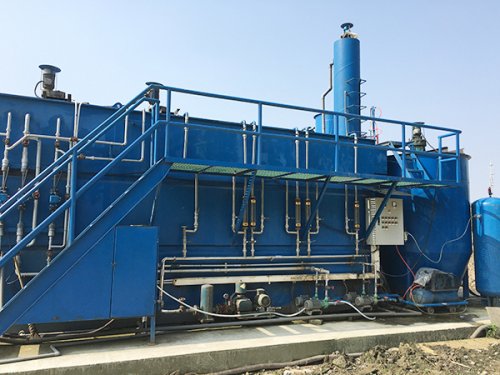
Wet scrubbers capture dust and gases by contacting the airstream with a liquid spray. They suit sticky, flammable, or hygroscopic dusts and high-temperature or soluble gaseous pollutants that dry filtration handles poorly. The trade-off is wastewater management and higher ongoing handling requirements, so they are selected where dry collection is impractical.
Key Selection Criteria
Particle Characteristics
The dust itself is the starting point. Particle size distribution determines whether a cartridge, baghouse, cyclone, or scrubber is appropriate; fine dust needs high-efficiency media while coarse dust can be pre-separated. Shape, density, abrasiveness, moisture, and tendency to agglomerate all influence media choice and cleaning strategy. For combustible dusts, the explosibility profile dictates required safety features.
Airflow Volume Requirements
Total airflow, expressed in cubic feet per minute or cubic meters per hour, defines the size of the entire system. It is derived from the capture hoods, enclosures, and process points that must be controlled. Underestimating airflow leaves dust escaping at the source; overestimating wastes energy and capital. Accurate airflow determination is the foundation of correct sizing.
Temperature and Chemical Environment
Gas temperature limits media selection, with standard polyester suitable for moderate temperatures and fiberglass or aramid required for higher heat. Chemical exposure, including acids, solvents, and moisture, affects both media and seal materials. Where the inlet stream exceeds media limits, cooling or special construction is required before the gas reaches the filters.
Space and Installation Constraints
Floor space, ceiling height, indoor versus outdoor placement, and access for maintenance constrain the physical design. Cartridge collectors address tight footprints, while large baghouses may need outdoor siting. Duct routing, fan location, and hopper discharge access should be considered during layout, not after delivery.
Filtration Efficiency Requirements
The target emission limit or in-plant air quality goal sets the required efficiency. HEPA or membrane media may be justified where the finest particles or strictest limits apply. The selected air-to-cloth ratio and media type must sustain that efficiency through the cleaning cycle, not only when the filters are new.
Compliance and Emission Standards
Buyers must identify the applicable occupational, environmental, and fire safety requirements before specification. This includes workplace exposure limits, ambient emission standards, and combustible dust safeguards. Documenting compliance capability up front prevents costly retrofits and operational interruptions later.
How to Size a Dust Collector
Sizing follows a straightforward sequence. First, determine the total airflow needed to capture and convey the dust from all source points. Second, select an appropriate air-to-cloth ratio, which is the airflow divided by the total filter media area. Pulse jet baghouses commonly operate within a typical range of roughly two to four feet per minute depending on the dust, while cartridge collectors often run at lower face velocities because of their higher media area.
Third, calculate the required filter area by dividing total airflow by the chosen air-to-cloth ratio. Fourth, translate that area into a number of bags or cartridges based on the individual element's surface area. Finally, confirm the fan can deliver the needed airflow against the expected system resistance, including the design differential pressure across the media. Applying a conservative ratio for difficult dust preserves filter life and stable pressure drop.
Understanding Total Cost of Ownership
The purchase price is only part of the picture. Total cost of ownership includes the initial capital, installation and ductwork, ongoing filter media replacement, energy consumed by the fan, compressed air for cleaning, labor for maintenance, and disposal of collected dust. A unit with a lower sticker price but a high air-to-cloth ratio may consume more filters and energy over its life. Evaluating lifetime cost, not just bid price, usually points to the better investment.
Energy is frequently the largest recurring cost, driven by fan power and operating hours. Small improvements in system resistance, such as well-designed ductwork and appropriately sized media area, compound into meaningful savings over years of operation. Filter replacement frequency, influenced by media quality and cleaning discipline, is the other major variable. Buyers should request expected filter life and energy estimates from suppliers and compare them on a normalized lifetime basis rather than on equipment price alone.
Customization and Integration Options
Most industrial installations require integration with existing process and building systems. Options include custom ductwork and hood design, variable frequency drives on fans for demand-based airflow, and automated controls that trigger cleaning by differential pressure. For combustible dusts, integration may involve explosion vents, isolation valves, suppression systems, or sprinkler protection consistent with recognized standards. Planning integration during specification avoids field modifications.
Material handling of the collected dust also deserves attention during design. The hopper discharge method, whether a rotary airlock, screw conveyor, or bin, must match the dust's flow characteristics and the plant's housekeeping plan. Where the dust has value as a recovered product, the discharge and storage configuration should preserve its quality. Addressing these details early keeps the installed system practical to operate day to day.
Questions to Ask Your Supplier
Before placing an order, buyers should ask targeted questions. What experience does the supplier have with your specific industry and dust type? Can they provide references from comparable installations? What are the lead time, warranty terms, and spare parts availability? Does the unit include documentation for the applicable compliance standards? What engineering support is offered for layout, startup, and troubleshooting? Clear answers to these questions reduce project risk and protect the investment.
FAQ
How do I know which dust collector type to choose?
Start with the dust characteristics and duty. Fine, dry, moderate-loading dust in a space-limited plant often suits a cartridge collector. High-temperature, heavy, or abrasive loads favor a baghouse. Coarse dust may only need a cyclone, and sticky or flammable dust may require a wet scrubber. Matching technology to the dust is the key step.
What does air-to-cloth ratio mean and why does it matter?
Air-to-cloth ratio is the airflow passing through a given area of filter media. A lower ratio reduces media loading, extends filter life, and stabilizes pressure drop, while a higher ratio cuts capital cost but raises operating stress. The right value depends on the dust and the required efficiency.
Is a more expensive dust collector worth it?
Often yes, when the higher cost reflects better media, appropriate sizing, and lower lifetime operating expense. Evaluating total cost of ownership rather than purchase price shows whether the investment pays back through fewer filter changes, lower energy use, and less downtime.
What compliance issues should I plan for?
Plan for worker exposure limits, environmental emission standards, and combustible dust safety requirements applicable to your process. Engaging these requirements during design prevents retrofits and keeps the facility operating without interruption.
Conclusion
Selecting an industrial dust collector is a decision that balances technology, sizing, compliance, and lifetime cost. By starting from the dust properties, comparing baghouse, cartridge, cyclone, and wet scrubber options against the duty, and sizing with a realistic air-to-cloth ratio, buyers can specify a system that performs reliably. Factoring in total cost of ownership and supplier capability then protects the investment well beyond the initial purchase.
References
U.S. Environmental Protection Agency. National Emission Standards for Hazardous Air Pollutants (NESHAP) and Air Pollution Control Technology Fact Sheets. https://www.epa.gov
Occupational Safety and Health Administration. OSHA Technical Manual (OTM), Section III: Chapter 3, Ventilation, and Combustible Dust guidance. https://www.osha.gov
National Fire Protection Association. NFPA 654: Standard for the Prevention of Fire and Dust Explosions from the Manufacturing, Processing, and Handling of Combustible Particulate Solids. https://www.nfpa.org
American Society of Heating, Refrigerating and Air-Conditioning Engineers. ASHRAE Handbook—HVAC Applications, Air Contaminants and Air Cleaners. https://www.ashrae.org
 Recommended Products
 Contact Us
—— Consultation Hotline: +86 17331708686
—— WhatsApp:+8617331708686
—— Email: lujingya66@163.com
—— Website:https://www.jiuzhoudust.com
—— Address: Siying Development Zone, Botou City, Hebei Province, China