






NewsCenter
Wire Mesh Demister: Working Principle, Structure and Industrial Applications
Author: jiuzhoudust Date: 2026-10-05 10:32:06 Views: 147
Mist, fog, entrained droplets — whatever you call it, liquid carryover in gas streams is a persistent problem across process industries. When a gas stream leaves a vessel, absorber, scrubber, or column, it almost always carries some liquid with it. That liquid can damage downstream equipment, contaminate products, increase pressure drop in piping, and cause environmental compliance issues if it escapes through the exhaust stack. The wire mesh demister — also called a mist eliminator, demister pad, or knitted mesh separator — is the most widely used device for removing entrained droplets from gas streams.
Its popularity is not accidental. Wire mesh demisters are simple, effective, inexpensive relative to other separation technologies, and applicable across a broad range of process conditions. They handle droplet sizes from 5 microns upward, operate at gas velocities that suit most industrial processes, and can be fabricated in virtually any size and shape to fit existing vessels. For engineers designing or troubleshooting gas-liquid separation systems, understanding how these devices work and how to select them is fundamental.
What Is a Wire Mesh Demister?
A wire mesh demister is a pad of knitted wire mesh installed in a gas stream to capture liquid droplets entrained in the gas. The pad is typically 100 to 150 mm thick, though thicknesses up to 300 mm are used in demanding applications. It is constructed from fine wire — usually 0.1 to 0.3 mm in diameter — knitted into a three-dimensional structure with a defined density, typically 80 to 200 kg/m³ for standard metallic meshes.
The demister works on a simple principle: as the gas passes through the tortuous path created by the knitted wires, entrained droplets cannot follow the gas streamlines around the wires. The droplets' inertia causes them to impinge on the wire surfaces, where they adhere, coalesce with other droplets, and eventually grow large enough that gravity drains them out of the pad. The gas exits the pad with its droplet loading significantly reduced, while the separated liquid drains back into the process.
Wire mesh demisters are not the only type of mist eliminator — vane pack separators, cyclonic separators, and fiber bed candles are alternative technologies — but they offer the best combination of cost, efficiency, and pressure drop for the majority of industrial applications where droplet sizes are in the 5 to 50 micron range and the gas flow rate is moderate to high.
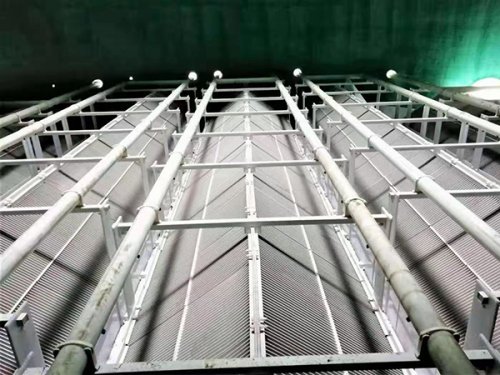
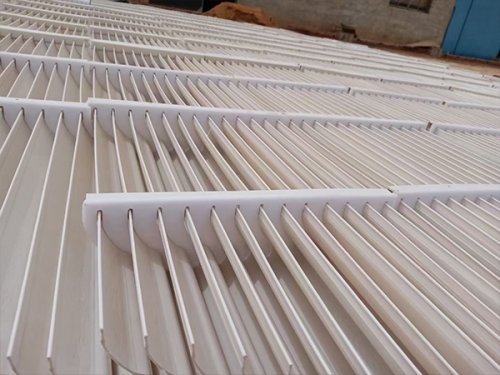
Working Principle
Inertial Impaction and Direct Interception
The primary capture mechanism in a wire mesh demister is inertial impaction. When gas flows through the mesh pad, it must navigate around the randomly oriented wires that form the three-dimensional structure. The gas streamlines bend and diverge as they pass through the tortuous path. Entrained droplets, however, have mass and therefore inertia — they resist changes in direction more than the gas molecules do.
For droplets larger than approximately 5 microns, the inertial force is sufficient that the droplet cannot follow the gas streamline around a wire. Instead, the droplet continues in a more or less straight trajectory and strikes the wire surface. Upon contact, the droplet wets the wire and adheres to it. As more droplets impinge on the same wire, they coalesce into larger droplets that eventually become heavy enough to drain downward by gravity.
Direct interception is a related mechanism that captures slightly smaller droplets. If a droplet's trajectory brings its center within one droplet radius of a wire surface, the droplet touches the wire and is captured even though its inertia was not sufficient to cause impaction. This mechanism is significant for droplets in the 1 to 5 micron range.
The combined effect of impaction and interception means that the capture efficiency increases with droplet size — large droplets are captured almost completely, while very fine droplets (below about 3 microns) may pass through the pad. The efficiency curve is not linear; it rises steeply above a characteristic droplet size that depends on the mesh geometry and gas velocity.
Diffusion and Brownian Motion for Fine Droplets
For very fine droplets — those below approximately 1 micron — inertial impaction and direct interception become ineffective because the droplet's mass is too low relative to the drag force. At this scale, a different mechanism comes into play: Brownian diffusion. Fine droplets undergo random thermal motion, causing them to deviate from the gas streamlines and potentially contact the wire surface.
Brownian diffusion capture is most significant at very fine particle sizes (sub-micron) and at low gas velocities, where the droplet spends more time in the pad and has more opportunity for random motion to bring it into contact with a wire. However, the efficiency of diffusion capture in standard wire mesh demisters is relatively low compared to impaction and interception. For applications requiring high capture efficiency of sub-micron droplets, denser mesh pads, fiber bed candles, or coalescing filters are typically more appropriate.
In practice, most industrial gas streams carry droplets primarily in the 5 to 50 micron range, where impaction and interception dominate. Diffusion is a contributing but not primary mechanism for standard demister applications.
Pressure Drop Characteristics
Pressure drop across a wire mesh demister is an important design parameter because it affects the sizing of upstream fans or compressors and the overall process energy consumption. The pressure drop is determined by the gas velocity, mesh density, pad thickness, and the amount of liquid loading in the gas.
For a typical mesh pad operating within its design velocity range, the dry pressure drop (with no liquid present) is usually 25 to 75 Pa (0.1 to 0.3 inches water gauge). When the pad is wet — operating with liquid loading — the pressure drop increases because the captured liquid partially obstructs the gas flow paths. The wet pressure drop typically ranges from 75 to 250 Pa, depending on the liquid loading.
If the gas velocity exceeds the design range, the pressure drop increases dramatically and the demister can enter a state called re-entrainment. At high velocity, the gas drag on the coalesced droplets on the wire surfaces becomes strong enough to tear the liquid off the wires and carry it downstream — defeating the purpose of the demister. Re-entrainment is the most common cause of demister underperformance and is almost always a gas velocity issue, not a mesh quality issue.
Structure and Construction
Knitted Wire Mesh Construction
The mesh pad is produced by knitting fine wire on specialized machines that create a three-dimensional structure of interlocking loops. Unlike woven mesh, which is a flat two-dimensional grid, knitted mesh has depth — the loops create a voluminous structure with tortuous gas paths through the pad. This three-dimensionality is essential for effective droplet capture, as it provides multiple impaction surfaces at various angles to the gas flow.
The knit pattern is typically a two-bar or four-bar raschel knit, producing a mesh that can be compressed to a controlled density. The density is specified as weight per unit volume (kg/m³) and directly affects both the capture efficiency and the pressure drop. Higher density means more wire surface area per unit volume, which improves capture efficiency but increases pressure drop. Standard densities for metallic mesh range from 80 to 200 kg/m³.
The mesh is typically supplied in layers that are stacked and compressed within a support frame to the specified pad thickness. Multiple layers of different densities can be combined in a single pad — a coarser outer layer for drainage and a finer inner layer for high-efficiency capture — to optimize performance for specific applications.
Pad Thickness and Mesh Density
Pad thickness and mesh density are the two primary geometric parameters that determine demister performance. Standard pad thicknesses are 100 mm and 150 mm, with 100 mm being the most common for general-purpose applications. Thicker pads (200 to 300 mm) are used for high-efficiency requirements or high liquid loading applications, where the additional pad depth provides more capture surface and drainage capacity.
The relationship between density and efficiency is not linear. A modest density increase from 120 to 150 kg/m³ may improve capture efficiency by several percentage points, but doubling the density to 240 kg/m³ may only marginally improve efficiency while doubling the pressure drop. The optimal density is application-specific and is typically selected based on the droplet size distribution, the required outlet liquid content, and the allowable pressure drop.
For applications with widely varying droplet sizes, a two-stage pad — a lower-density layer followed by a higher-density layer — can be more effective than a single-density pad of equivalent total thickness. The first layer captures the larger droplets that would otherwise flood the fine mesh, while the second layer captures the remaining fine droplets.
Support Structures and Frames
The mesh pad must be held in place within the vessel by a support structure that maintains the pad at the correct position and orientation while allowing gas to pass through uniformly. The support frame typically consists of upper and lower grids — perforated plates or heavy wire mesh — that sandwich the demister pad between them. The grids are held apart by spacer bars or bolts that maintain the pad at the design thickness.
The frame material must be compatible with the process environment. In corrosive service, the frame is often the same material as the mesh — stainless steel, alloy, or plastic. The frame must also be rigid enough to withstand the gas pressure drop without flexing, which could compress the mesh unevenly and create gaps where gas bypasses the pad.
For large-diameter vessels, the demister pad may be fabricated in sections that are assembled inside the vessel. Each section is typically 300 to 600 mm wide and spans the full radius or diameter of the vessel. Sectional construction allows the demister to be installed through standard vessel manways and facilitates replacement of individual sections if localized wear or damage occurs.
Material Selection (Stainless Steel, PP, PTFE, Alloy)
Material selection for the wire mesh is driven by the process gas composition, temperature, and the chemical characteristics of the entrained liquid. The most common materials:
Stainless steel (304, 316, 316L) — The default choice for a wide range of applications. SS304 is suitable for non-corrosive environments at moderate temperatures. SS316 and 316L offer improved resistance to chlorides and reducing acids, making them standard for chemical and marine applications. Temperature limit for continuous service is approximately 400°C to 500°C, depending on the grade.
Polypropylene (PP) — Used for low-temperature applications (typically below 80°C) where corrosion resistance to acids, alkalis, and many solvents is required. PP mesh is lightweight, inexpensive, and available in a range of densities. Common in scrubbers, acid mist applications, and wastewater treatment. Not suitable for high-temperature service or environments with strong oxidizing agents.
PTFE (Teflon) — Offers exceptional chemical resistance and can operate at temperatures up to approximately 200°C. PTFE mesh is used in highly corrosive environments where metals would fail — including concentrated acid service, fluorine-containing gas streams, and aggressive solvent environments. PTFE's low surface energy can be advantageous in applications where liquid drainage from the pad is difficult, as the liquid does not wet the PTFE surface and drains more readily.
Specialty alloys (Hastelloy, Monel, Inconel) — Specified for extreme service conditions. Hastelloy C-276 handles strong oxidizing and reducing acid environments. Monel is used in hydrofluoric acid service. Inconel provides high-temperature strength and oxidation resistance in demanding thermal applications. These materials are significantly more expensive than standard stainless steel and are reserved for applications where no other material provides adequate service life.
The mesh material, frame material, and support grid material should be galvanically compatible to prevent galvanic corrosion at the contact points. In practice, using the same alloy for all components is the most reliable approach.
Applications
Separators and Knockout Drums
The most common application of wire mesh demisters is in gas-liquid separators and knockout drums. In these vessels, the gas enters at one end, flows through the demister pad installed near the outlet, and exits with liquid carryover reduced to acceptable levels. The separated liquid drains from the pad into the liquid pool at the bottom of the vessel.
In natural gas processing, knockout drums with demister pads are used to remove liquid water and hydrocarbon condensate from the gas stream before it enters compressors, pipelines, or treatment units. Compressor inlet scrubbers virtually always incorporate a demister pad to protect the compressor from liquid carryover that could damage the impeller and bearings.
The sizing of the separator vessel is influenced by the demister's operating velocity requirement. The vessel cross-sectional area at the demister location must be large enough to keep the gas velocity within the demister's design range — typically 1 to 5 m/s for standard metallic mesh, depending on the gas density and liquid loading.
Scrubber Towers
Packed bed scrubbers and spray tower scrubbers frequently incorporate demister pads at the gas outlet to prevent scrubbing liquid from being carried out of the tower with the cleaned gas. In acid gas scrubbers — where the scrubbing liquid is typically a caustic solution — the demister pad captures entrained caustic droplets that would otherwise be emitted to the atmosphere.
Material selection for scrubber demisters is critical because the environment is both wet and corrosive. PP mesh is common in acid scrubbers, while stainless steel or alloy mesh is used in high-temperature or oxidizing environments. The demister pad in a scrubber is typically installed between the top spray nozzle and the gas outlet, with sufficient clearance above the spray header to prevent direct impingement of spray on the pad.
Distillation and Fractionation Columns
In distillation columns, wire mesh demisters are sometimes installed below the top vapor nozzle to reduce liquid entrainment in the overhead vapor stream. Entrainment can be a particular problem in columns operating at high vapor rates or with low surface tension liquids, where the tendency for liquid to be carried up by the vapor is greater.
The demister pad in a column application is typically installed in a specially designed section between the top tray and the vapor outlet nozzle. The pad must be sized to handle the column's vapor flow rate at the operating pressure and temperature, which may require a larger diameter section than the column itself to reduce the vapor velocity to the demister's design range.
Marine and Offshore Processing
Offshore oil and gas platforms use wire mesh demisters in gas dehydration units, gas compression trains, and produced water treatment systems. The marine environment imposes additional material requirements — salt-laden atmospheres demand 316L stainless steel or higher alloys for all wetted components, including the demister mesh and support frame.
Space constraints on offshore platforms often favor compact separator designs with high-efficiency demisters rather than larger gravity separators. The demister allows the separator vessel to be smaller for a given gas handling capacity, which is a significant advantage where platform deck space and weight are at a premium.
Chemical Processing
Chemical plants use wire mesh demisters across a wide range of unit operations: evaporator vapor outlets, absorber outlets, reactor vent streams, and drying operations. Each application has specific material and performance requirements dictated by the chemical environment. In sulfuric acid plants, for example, demister pads in the absorption tower outlet remove sulfuric acid mist from the gas stream — an application that typically requires special glass fiber or PTFE mesh rather than metallic wire.
In polymerization reactors, demister pads prevent monomer carryover in the vent stream, protecting downstream condensers and compressors from liquid monomer that could cause fouling or safety issues. The mesh material must be compatible with the monomer and any catalyst residues in the vent stream.
Selection Criteria
Droplet Size Distribution
The droplet size distribution in the gas stream is the single most important selection parameter. If the droplets are predominantly larger than 10 microns, a standard-density mesh pad will achieve high removal efficiency. If a significant fraction of the liquid load is in droplets smaller than 5 microns, a higher-density pad or a multi-stage configuration may be needed.
Droplet size distribution can be estimated from the process conditions — gas velocity, liquid properties, and the mechanism generating the droplets (spray, boiling, condensation) — but is most accurately determined through sampling and measurement. If measurement is not feasible, the selection should err on the side of higher efficiency (denser pad or multiple stages) to provide a margin for uncertainty.
Gas Velocity and Capacity
The gas velocity through the demister pad must fall within a design range that balances capture efficiency and re-entrainment avoidance. The optimal velocity depends on the gas density, liquid density, and liquid viscosity. A commonly used design formula relates the Souders-Brown velocity constant to these properties.
Operating below the design velocity reduces capture efficiency because droplets have less inertia and are less likely to impinge on the wires. Operating above the design velocity causes re-entrainment — the gas drag overcomes the gravity drainage of coalesced liquid, and liquid is carried out of the pad with the gas. The design velocity typically provides a 30 to 50% margin below the re-entrainment threshold.
For variable flow processes, the demister must be sized for the maximum expected gas flow rate. If the flow varies widely, a variable-area demister housing or a bypass around the demister may be considered for low-flow periods, though these add complexity and cost.
Operating Temperature and Pressure
Temperature limits are imposed by the mesh material. PP mesh is limited to approximately 80°C continuous service. PTFE can handle up to approximately 200°C. Stainless steel mesh can operate at temperatures up to 400°C to 500°C. For higher temperatures, specialty alloys or ceramic fiber materials are available, though these fall outside the standard wire mesh demister category.
Operating pressure affects the gas density, which in turn affects the gas velocity that can be tolerated without re-entrainment. Higher pressure increases gas density, which increases the drag force on coalesced droplets at a given superficial velocity. The design velocity must be adjusted downward for high-pressure applications to maintain the same margin against re-entrainment.
Corrosion and Chemical Compatibility
The mesh material must resist corrosion from both the gas and the entrained liquid. In acid environments, SS316L, PP, or PTFE are typical selections. In caustic environments, SS304 is generally adequate, though high-concentration caustic at elevated temperature may require nickel-based alloys. In hydrocarbon service, carbon steel mesh is sometimes used for cost reasons, though stainless steel is preferred for long-term reliability.
Galvanic compatibility between the mesh, the support frame, and the vessel wall must be considered. Using the same material for all wetted components eliminates galvanic corrosion risk. Where dissimilar materials are unavoidable, insulation at the contact points can mitigate but not eliminate the risk.
Installation and Maintenance
Proper installation begins with verifying that the support grid is level and structurally sound. The demister pad should fit snugly against the vessel wall — any gap between the pad edge and the wall allows gas to bypass the mesh, dramatically reducing separation efficiency. Gasketing or sealing strips may be used at the pad-to-wall interface for vessels where the fit is not tight.
The pad should be oriented with the knit direction perpendicular to the gas flow. For multi-layer pads, the layers should be installed in the order specified by the manufacturer — some designs use a coarse layer on the upstream side for pre-separation and a fine layer on the downstream side for polishing, while others reverse the order for specific drainage characteristics.
Maintenance of wire mesh demisters is minimal when the application is properly designed. The primary inspection task is checking for pad degradation — corrosion, wire breakage, mesh collapse, or fouling with solids. Solids fouling can occur if the gas stream carries particulate that deposits on the wire surfaces; in such cases, upstream particulate removal or periodic pad washing may be required.
Pad replacement is straightforward: remove the hold-down bars or grids, extract the old pad, install the new pad, and reassemble the support structure. The old mesh can typically be recycled if it is metallic, though heavily contaminated or corroded mesh may require disposal as hazardous waste depending on the process service.
Performance monitoring is done by measuring the liquid carryover downstream of the demister — either through visual inspection of the gas outlet, sample line analysis, or pressure drop trending. A sudden increase in pressure drop may indicate pad fouling or liquid flooding, while a decrease in pressure drop may indicate pad damage or gas bypass.
Frequently Asked Questions
What droplet size can a wire mesh demister remove?
Standard wire mesh demisters effectively remove droplets larger than 5 to 10 microns with high efficiency (90% and above). Droplets in the 3 to 5 micron range are captured at moderate efficiency. Below 3 microns, capture efficiency drops significantly because inertial impaction becomes ineffective. For sub-micron mist, fiber bed candles or electrostatic precipitators are more appropriate technologies.
What is the maximum gas velocity for a wire mesh demister?
The maximum velocity depends on the gas and liquid properties and is determined using the Souders-Brown equation or an equivalent correlation. For air at atmospheric pressure with water droplets, the typical design velocity range is 2 to 5 m/s. The specific value must be calculated for the actual gas density, liquid density, and liquid viscosity at operating conditions, with a safety margin of 30 to 50% below the re-entrainment threshold.
How do you clean a fouled wire mesh demister pad?
Cleaning methods depend on the fouling material. For soluble deposits (salts, caustic residues), water washing in place or removing the pad and soaking it in water may be effective. For organic fouling, solvent cleaning may be required. For severely fouled or corroded pads, replacement is typically more economical than cleaning. The best strategy is to prevent fouling through upstream particulate removal or by selecting a mesh material and density that resists the specific fouling mechanism.
What is the difference between a wire mesh demister and a vane pack separator?
A wire mesh demister uses a pad of knitted wire to capture droplets through inertial impaction on fine wires. A vane pack separator uses a series of corrugated plates with zigzag channels that force the gas to change direction repeatedly, causing droplets to impinge on the plate surfaces. Vane packs handle higher gas velocities and are more resistant to fouling and solids loading, but they are less efficient for fine droplets (below 10 microns) and more expensive. Wire mesh demisters offer higher efficiency for fine droplets at lower cost, but are more susceptible to fouling.
Can a wire mesh demister be used in a horizontal pipe?
Wire mesh demisters are most effective when installed in a vertical gas flow orientation, where gravity assists in draining coalesced liquid from the pad. In horizontal flow, the liquid must drain downward against the cross-flowing gas, which can cause re-entrainment at lower velocities than in vertical flow. Horizontal installations are possible but require reduced gas velocity and may use mesh with special drainage features. For horizontal piping, vane pack or cyclonic separators are often preferred.
Conclusion
Wire mesh demisters are a foundational component of industrial gas-liquid separation systems. Their effectiveness relies on a combination of inertial impaction, direct interception, and Brownian diffusion mechanisms that capture entrained droplets on fine wire surfaces within a knitted mesh pad. The simplicity of the concept — a pad of wire mesh that captures mist — belies the engineering precision required to select the right density, thickness, material, and operating velocity for a given application. From separators and scrubbers to distillation columns and offshore platforms, wire mesh demisters provide reliable, cost-effective mist elimination when properly specified and maintained. For engineers and process designers, the key to success lies in accurately characterizing the droplet size distribution, selecting compatible materials, and operating within the velocity range that delivers high efficiency without re-entrainment.
References
ASHRAE Handbook — HVAC Systems and Equipment, Chapter 34: Gas Cleaning and Particulate Removal, American Society of Heating, Refrigerating and Air-Conditioning Engineers.
EPA, "OAQPS Control Cost Manual, Chapter 8: Wet Collectors," U.S. Environmental Protection Agency, Office of Air Quality Planning and Standards.
Bürkholz, A., "Droplet Separation," VDI Heat Atlas, Springer-Verlag, Berlin Heidelberg.
NFPA 30, "Flammable and Combustible Liquids Code," National Fire Protection Association.
API Specification 12J, "Specification for Oil and Gas Separators," American Petroleum Institute.
 Recommended Products
 Contact Us
—— Consultation Hotline: +86 17331708686
—— WhatsApp:+8617331708686
—— Email: lujingya66@163.com
—— Website:https://www.jiuzhoudust.com
—— Address: Siying Development Zone, Botou City, Hebei Province, China